 Peptide Works
Research-Grade Peptides
Peptide Works
Research-Grade Peptides
Peptide Works
Research-Grade Peptides
Peptide Works
Research-Grade Peptides
From lyophilised vials and pre-mixed solutions to nasal sprays, oral capsules and multi-compound blends — every format designed around the way research actually works.

Peptide Works is simply about getting affordable, high-purity research peptides into the hands of the people who actually need them. Simple enough, you might say; but anyone who has done any sourcing of compounds for laboratory work knows there is very little overlap between simple and peptide procurement. With erratic purity, unclear documentation, untrustworthy shipping and suppliers that disappear after a single order, establishing a reputable source can be research in itself.
That frustration is precisely what Peptide Works was designed to resolve. The firm is focused exclusively on research-grade peptides with in excess of fifty unique compounds available in several delivery formats — lyophilised vials, pre-mixed solutions, nasal sprays, oral capsules and multi-compound blends. All of the products in the Peptide Works catalogue are tested for a minimum purity of 99%, verified by an independent third party, and ship with full Certificates of Analysis. These are not marketing statements hidden in small print. They are the baseline.
The catalogue itself embodies a real comprehension of the demands of modern peptide research. It spans tissue-repair compounds, neuropeptides, metabolic research molecules like https://peptide-works.com/melanotan-i/, immune-modulating peptides, growth hormone secretagogues and longevity-targeted sequences. Here researchers from across disciplines can find compounds presented and made available in formats appropriate to their particular protocols. A laboratory conducting subcutaneous injection studies has different needs than a group researching intranasal absorption, and Peptide Works embraces that diversity without trying to fit everyone into the same box.
Aside from the peptides themselves, Peptide Works offers all the practical accessories required to keep a research workflow travelling smoothly — bacteriostatic water, syringes with numerous gauge measurements, pen delivery systems, alcohol preparation products and sharps disposal containers. This is a conscious decision to provide these alongside the peptides. With everything coming from one trusted source, you worry about fewer variables, manage fewer suppliers and reduce the chances of something going wrong between the order and the actual bench work.
In truth, there is a simple philosophy uniting all of this: researchers want compounds they can rely on, documentation they can verify, and suppliers that take their work seriously. Therapeutic promises or health claims are not made by Peptide Works. The company sells its products strictly for research purposes, a mission that the entire operation is built around doing properly and transparently.

Lyophilised peptide vials are the gold standard within most peptide research for a reason. Freeze-drying is an important process to remove water from a peptide solution while keeping the molecular structure of the compound, leading to a dry powder which remains stable under controlled conditions for long periods. In a research context, this is significant. Once a peptide in solution is reconstituted, it starts to degrade immediately — amino acid bonds hydrolyse, oxidation occurs and biological activity diminishes. A vial that has been properly lyophilised and then stored correctly retains its integrity until the researcher wishes to use it. That period of stability is not a luxury; it is a pragmatic requirement for anyone attempting studies that extend within weeks or months.
Once a researcher is prepared to use a lyophilised peptide, it can be reconstituted with relative ease. Bacteriostatic water — sterile water with 0.9% benzyl alcohol — is often drawn into a syringe and then slowly added along the inner wall of the vial. It dissolves slowly, and gentle agitation (never shaking, which generates mechanical stress that can break peptide bonds) results in a complete clear solution, fully prepared for immediate use. The bacteriostatic agent prevents bacterial growth, allowing the reconstituted peptide to be stored under refrigeration and drawn from multiple times. Compounds like https://peptide-works.com/hcg/ particularly benefit from this multi-draw capability.
Peptide Works offers one of the most extensive single-supplier vial catalogues, and that range represents real awareness of what researchers need rather than a restocking exercise taken at random.
In the case of research focused on tissue repair and recovery, compounds listed in the catalogue include BPC-157, a pentadecapeptide being studied with considerable attention in wound-healing and gastrointestinal studies — along with TB500, KPV and LL-37 — each targeting different mechanisms within the body's internal repair and immune-response pathways.
For growth hormone and metabolic research, the lineup is extensive: CJC-1295 in both DAC and No DAC, Ipamorelin, GHRP-2, GHRP-6, Sermorelin, Tesamorelin, HGH Fragment 176–191, HGH 191AA, and AOD-9604. It may seem academic to the casual observer but the availability of both CJC-1295 DAC and No DAC versions matters for important reasons; the Drug Affinity Complex dramatically changes the half-life and release profile of this peptide and researchers interested in tracking growth hormone secretion need both variants available if they are to design meaningful comparative protocols.
Compounds such as Selank, Semax, DSIP, P-21 and Pinealon are of great interest in the field of neuropeptide and cognitive research. These peptides are investigated for their interactions with neurotransmitter systems, sleep architecture and neuroprotective pathways — investigations that require especially high compound purity, as trace impurities may compromise sensitive neurological assays.
The anti-ageing and longevity research category contains Epithalon, FOXO4-DRI, GHK-Cu, Humanin, MOTS-C, SS-31 and NAD+ vials. Thymosin Alpha-1, Thymalin and LL-37 serve immune modulation research. Kisspeptin, PT-141, Gonadorelin, HCG, HMG, Triptorelin and Oxytocin are all available for reproductive and hormonal studies. Adipotide, AICAR, AMPK, Follistatin 344, GDF-8, Melanotan I, Melanotan II are available for body composition research. And for researchers on the frontier of science, the catalogue reaches into speciality orders like ACE-031, ARA-290, B7-33, PNC-27, PTD-DBM, VIP, Orexin A, Bronchogen, Cartalax and Vilon.
All vials in the Peptide Works catalogue are shipped with a Certificate of Analysis which verifies that they contain 99% purity or greater as determined by HPLC analysis. That level of consistency across such a broad scope is not by coincidence — it indicates a supplier that has structured their quality systems around the vial format at the centre of their business.

Reconstituting lyophilised peptides from scratch is not possible in every research setting due to time, equipment or interest. This is not a criticism — it simply reflects the way different laboratories operate. Reconstitution in a university lab with a dedicated prep area and trained technicians is also very different from it being done in a smaller independent facility, where the same researcher designs the protocol, prepares the compounds, runs the assay, and analyses the data. Pre-mixed peptide solutions from Peptide Works especially mitigate that step for the latter scenario and simplify a demanding workflow.
A pre-mixed peptide is one that arrives already reconstituted in bacteriostatic water at a defined concentration. The compound is identical to that which ships in the lyophilised vial — same synthesis, same purification, same purity check — but the product has been reconstituted under controlled conditions before it leaves the facility. This allows the researcher to go straight from receiving the shipment right to using the compound in their protocol; there is no intermediate step of calculating dilution, sourcing appropriate bacteriostatic water, or wondering whether the reconstitution was performed correctly.
This is more than just a matter of convenience; there is a valid scientific justification for this format. Reconstitution introduces variables. The amount of solvent, the rate at which it is added, the method, the speed and temperature of the mixing process — practically every step can affect the final concentration and uniformity in a solution. When a researcher orders a pre-mixed peptide from Peptide Works, those parameters are controlled at the source. Each unit of that product is made to an identical specification, so concentration consistency is maintained between batches. That calibre of batch-to-batch reliability removes yet another source of experimental noise, particularly for studies spanning multiple supply cycles.
The vast majority of the individual compounds in the Peptide Works vial catalogue are also available pre-mixed. Some of these include BPC-157, TB500, Ipamorelin, CJC-1295 (both DAC and No DAC), Selank, Semax, Epithalon, GHK-Cu, DSIP, PT-141, Thymosin Alpha-1 and dozens more — the selection is nearly identical to the vial range. The purity threshold remains the same — 99% or greater, third-party verified with COA documentation.
Pre-mixed solutions differ from lyophilised vials in terms of storage requirements. Because the peptide is in solution from receipt, refrigeration is required immediately and the shelf life is shorter than an unopened lyophilised vial stored at the same temperature. More practically, researchers planning longer-term experiments might opt to keep a lyophilised stock ready to reconstitute when required, while those running shorter protocols and in need of an immediate setup would find the pre-mixed format genuinely beneficial. It comes down to having the product format align with your research timeline, and having both options available from one vendor makes the decision straightforward.

The interest in delivering peptides via an intranasal route has grown a great deal, and the reasons are physiological in nature rather than trend-driven. The olfactory region of the nasal mucosa and its high vascularisation offers a route that bypasses hepatic first-pass metabolism — meaning compounds taken orally are partially metabolised by the liver prior to entering systemic circulation. Peptides are a common example of molecules that benefit from this delivery method, since these fragile molecules face relatively significant enzymatic degradation with oral administration through the gastrointestinal tract. Intranasal routes often deliver more intact compound to the relevant systems.
Neuropeptide delivery is particularly relevant here. The nasal cavity resides in intimate anatomical proximity to the central nervous system, separated only by the cribriform plate, and there is accumulating literature examining whether peptides delivered intranasally can access brain tissue more directly than through systemic circulation. For researchers studying cognitive function, mood regulation, sleep architecture or neuroprotection, the intranasal format is not merely a convenience — it is mostly a methodological necessity.
Peptide Works has an extensive catalogue of nasal sprays including single-compound nasal sprays as well as multi-compound nasal stacks.
Cognitive and mood research is served through the Selank Nasal Spray, Semax Nasal Spray, and the Semax Selank Nasal Stack which combines both in one product for neuroresearchers studying synergistic activity with GABAergic and neurotrophic pathways. The DSIP Nasal Spray is one option for sleep and recovery research, and the DSIP Epithalon Nasal Stack adds a longevity-associated compound to the sleep-research format.
Protocols for tissue repair may draw from the BPC-157 Nasal Spray, the BPC-157 TB500 Nasal Spray combination, or the BPC-157 KPV Nasal Stack as needed. The Thymosin Alpha-1 Nasal Spray and Thymosin Alpha-1 LL-37 Nasal Stack both span immune research applications by employing two compounds that work independently but may enhance each other's effectiveness against unwanted pathogens when used as a stack.
For hormonal and reproductive research, the PT-141 Nasal Spray is available along with the PT-141 Oxytocin Nasal Stack and the PT-141 Kisspeptin Nasal Stack. Combination sprays for growth hormone research include the Ipamorelin CJC-1295 No DAC Nasal Spray, GHRP-6 CJC-1295 DAC Nasal Spray and HGH Frag 176-191 CJC-1295 DAC Nasal Spray.
The nasal stack format deserves particular attention. When two or more peptides are administered together in one nasal spray device, the conditions mimic co-administration more closely than sequential dosing and allow for an evaluation of their interactions. Combining compounds into one spray also mitigates the intra-subject variability associated with administering multiple compounds from separate sprays minutes apart, and it simplifies the logistical burden posed by many multi-compound protocols. All nasal products from Peptide Works are held under the same 99% or greater purity standard applied throughout the catalogue.

Peptide research is often not performed in a vacuum. The majority of interesting studies relate to how compounds interact: do two peptides with overlapping mechanisms have additive effects, or does a secretagogue and a growth hormone fragment employ different kinetics when administered together? Blends and stacks take their place in a researcher's supply chain for this type of multi-compound work.
It is important to know the difference between both these formats. A blend is a single vial containing two or more peptides combined at the time of manufacture, then lyophilised together and reconstituted in a single solution. A stack, on the other hand, is a kit of individual vials — separate compounds that are bundled together because they have been largely used for the same research protocol. Blends help reduce preparation time and guarantee accurate co-administration ratios. Stacks allow you to order a single package whilst retaining the flexibility of dosing each separate compound independently.
Peptide Works provides both formats in several research categories and the combinations are not random pairings. The catalogue contains a range of blends and stacks that represent well-established patterns from the research literature: compounds that working scientists actually investigate together, in compliance with known mechanisms of action and published investigative protocols.
The blend and stack selection in tissue repair research is one of the most extensive. The BPC-157 TB500 Blend provides the most well-researched repair-associated peptides in a single vial. Designed for wider multi-compound coverage, the BPC-157 TB500 GHK-Cu Peptide Stack adds a copper-peptide complex studied in the context of wound healing and tissue remodelling. The BPC-157 VIP Peptide Stack combines the body-protecting compound with vasoactive intestinal peptide, of interest to gastrointestinal and inflammation researchers. The KPV BPC-157 Peptide Stack brings together an anti-inflammatory tripeptide with BPC-157.
The growth hormone research category draws on an equally rich compendium of blends. The GHRP-6 CJC-1295 DAC Blend and GHRP-6 CJC-1295 No DAC Blend use a growth hormone-releasing peptide in combination with modified GH-releasing hormone analogues, while the Ipamorelin CJC-1295 No DAC Blend employs a different secretagogue within the same framework. For studies investigating the integrated nature of growth hormone release as it relates to fat metabolism, a lipolytic fragment is added to the mix with the Ipamorelin HGH Frag 176-191 CJC-1295 DAC Blend and the Ipamorelin HGH Frag 176-191 CJC-1295 No DAC Blend. The HGH Frag 176-191 CJC-1295 DAC Blend rounds out this category.
Examples within longevity and immune stacks include the Epithalon DSIP Peptide Stack — which combines a telomerase-associated peptide with a sleep-related neuropeptide — and the Thymalin Epithalon Peptide Stack, which brings together a thymic peptide that has been studied in immunological ageing research. The BPC-157 GHK-Cu Thymosin Alpha-1 Peptide Stack combines three distinct but potentially synergistic mechanisms of action for tissue repair and immune function.
Other notable entries include the Kisspeptin PT-141 Peptide Stack for reproductive research, the GHK-Cu PTD-DBM Peptide Stack and GHK-Cu TB500 Peptide Stack for skin and tissue studies, the AOD-9604 BPC-157 Peptide Stack for body composition, the Selank Semax Peptide Stack for cognitive research, and the Tesamorelin Ipamorelin Peptide Stack for growth hormone optimisation protocols.
All blends and stacks from Peptide Works are held to the same 99% or greater purity standard as individual compounds. Peptide blending does not mean sacrificing purity, as each element is pre-verified prior to compounding.

Peptide oral delivery poses a set of challenges that are fundamentally different from injectable or intranasal formats — and hence why this is an active area of research. Most peptides face significant degradation through the oral route because stomach acid denatures the molecular structure and proteolytic enzymes cleave the peptide before it reaches systemic circulation. Questions concerning how specific peptides behave in the gut when given by oral route, what physiological features protect them from being attacked by gastric processes, or whether their bioavailability is more effective than different ways of administration under exactly matched conditions are all valid issues that require careful analysis.
Peptide Works features a specialised selection of compounds in oral capsule form, selected based on whether they represent peptides with proven profiles of oral stability or compounds where oral bioavailability is itself being investigated.
BPC-157 Capsules are one of the most popular products in this area. BPC-157 is notable among peptides as it was found to be stable over a wide pH range in preclinical studies including the gastric environment. Thus it is a strong candidate for study via oral administration. The BPC-157 Thymosin Beta-4 Capsules combine two peptides that are often studied in repair and recovery scenarios into one oral format.
Epithalon Capsules and GHK-Cu Capsules provide oral-route research products in the areas of longevity, telomerase activity, and copper-peptide tissue remodelling studies. KPV Capsules offer the anti-inflammatory tripeptide in an oral form that is well suited for studies in gastrointestinal inflammation where the target tissue is directly relevant.
MK-677 Capsules contain Ibutamoren, a growth hormone secretagogue in capsule form. Though a non-peptide compound, its widespread use in conjunction with peptide research protocols has earned its place in the catalogue. 5-Amino-1MQ Capsules provide an oral format for interventional studies on energy metabolism and fat cell regulation. Tesofensine Capsules are available to scientists working in the field of appetite control and metabolism. Thymosin Beta-4 Capsules round out the lineup, providing an orally active version of this repair-and-regeneration-associated peptide.
The oral capsule format fills a particular need in research — a non-invasive route of administration for protocols where oral delivery is required or there is an aim to assess bioavailability from the oral route relative to other routes. All Peptide Works capsule products are produced under the same quality framework that applies to the injectable range, backed with purity verification and documentation as standard.
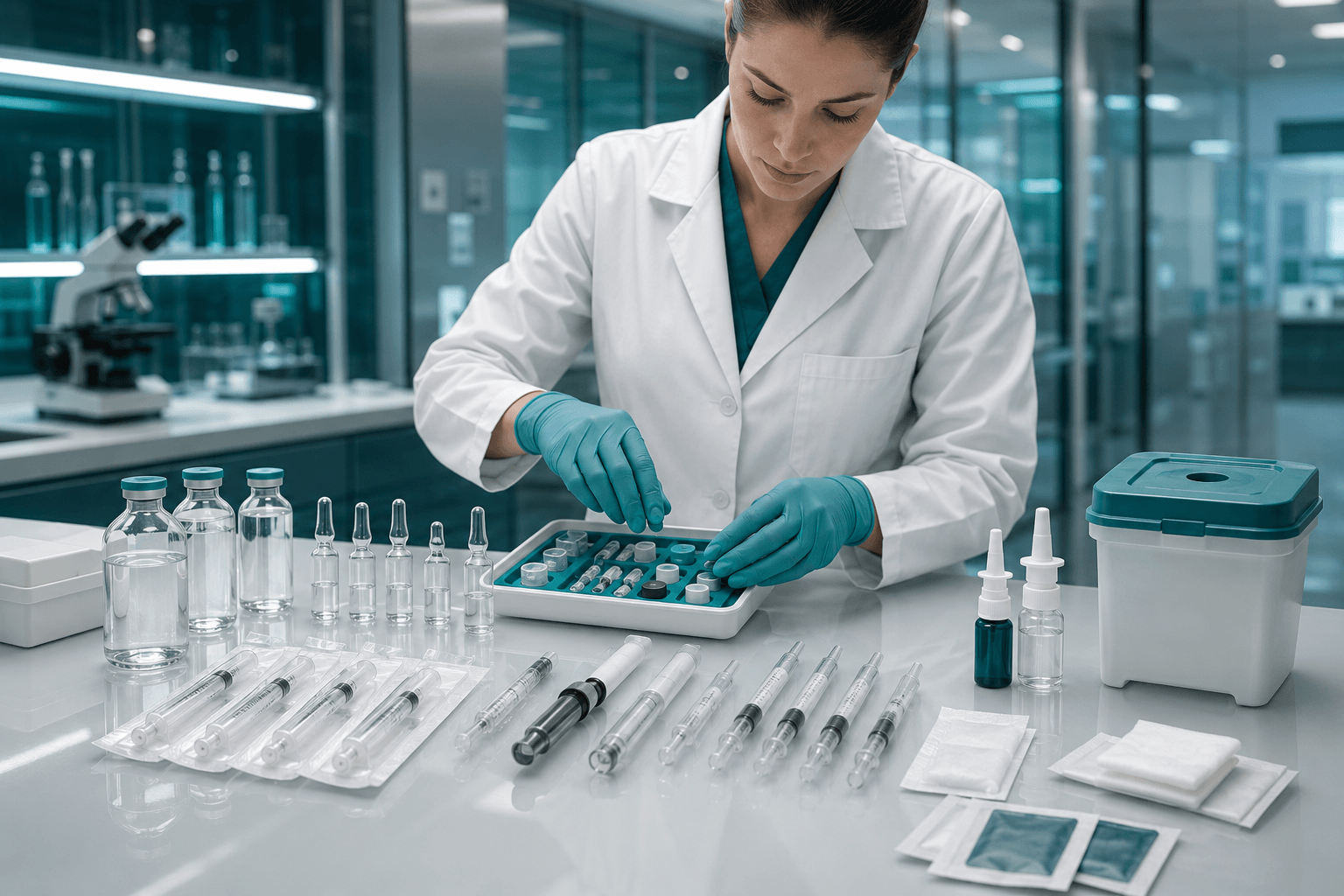
A vial full of pure peptide is only as good as everything else surrounding it in the lab. Reconstitution requires the right water. Administration requires the right syringes. Disposal requires proper sharps containers. And each of these items must meet the same standard of quality and cleanliness as the peptide itself — because a contaminated syringe or non-sterile water will compromise results just as readily as an impurity in the compound.
Peptide Works carries a full line of accessories and additional supplies tailored for this reason. Bacteriostatic Water is available for standard reconstitution of lyophilised peptides, and Sterile Water in 2ml units is offered for applications requiring the absence of benzyl alcohol. The catalogue also includes Fixed Needle Empty Syringes in 27g, 29g and 30g gauges — the three most frequently employed sizes within subcutaneous peptide research. For those researchers who prefer a pen-style delivery system, the Deluxe Pen and Empty Cartridge Set, Empty Cartridges for Peptide Pens, Empty Pen Cases, and Injection Pen Needle Packs are available.
Preparation and hygiene supplies include alcohol wipes for vial-top sterilisation and injection-site preparation. On the disposal side, Sharps Safe containers and disposal options for used needles help enable safe handling and compliance. The Peptide Accessory Kit is a bundled combination of the necessary consumables, for those researchers needing a more convenient starter kit that puts all the required materials in one package.
The catalogue also contains some supporting compounds paired with peptide research protocols. L-Glutathione Peptide Vials provide the antioxidant compound. Vitamin B12 Nasal Spray is a supporting nutrient compound in intranasal format. NAD+ vials are available, containing the coenzyme nicotinamide adenine dinucleotide that is important for metabolic and longevity studies.
When you source all of these from a single supplier, you minimise the risk of introducing unrecognised variables into a controlled research environment. The researcher can feel comfortable knowing what goes into their protocol at each step, because the syringes, water, preparation supplies and peptides all come from Peptide Works. Supply-chain consistency is something most people only think about when it goes wrong — and only then realise how difficult it can be to trace a problem back upstream.

There is an uncomfortable fact about the peptide supply market: purity claims are simple to make, but nearly impossible to verify without independent testing. One supplier might label a compound as "99% pure" but that figure is meaningless without supporting, reproducible analytical data from a certified laboratory. Any researcher who has been in the field long enough has experienced a scenario where a compound that appears fine initially passes initial checks, but when it comes to the assay, one batch works well and similar batches do not — and after weeks of troubleshooting, it turns out the root cause is an impure or mis-synthesised peptide.
At Peptide Works, purity is a founding principle of the business, not an afterthought or talking point. Each compound in the catalogue — whether it arrives as a lyophilised vial, pre-mixed solution, nasal spray, capsule, or blend — is guaranteed to be 99% pure or greater. That limit is confirmed by independent third-party testing, rather than in-house measurements alone.
The main analytical technique employed is High-Performance Liquid Chromatography, or HPLC. This technique separates the different components of a sample according to their chemical interactions with a stationary phase and mobile solvent system, producing a chromatogram showing the target compound as well as any impurities. The purity value is defined as the peak area corresponding to the target peptide expressed as a percentage of the total peak area. For Peptide Works products, 99% or greater must be reached before a batch is approved for release.
Mass spectrometry complements HPLC by corroborating that the molecular weight of the synthesised peptide matches the expected value for the target sequence. Mass spectrometry is a powerful analytical technique for identifying whether a peptide, even after purification and appearing chromatographically pure, has the correct amino-acid composition — something that chromatography alone cannot always detect. Together, these two methods give clarity about both the purity and identity of every compound.
Each product includes a Certificate of Analysis that records these test results. The COA is not a generic document stamped on every order; it represents the specific batch of material actually received by the researcher. The HPLC trace, the mass spectrometry data, and the purity percentage calculated are all specific to the material in that vial and not from some prior production run.
Peptide Works maintains multiple checkpoints to continuously monitor the synthesis process, from initial amino acid coupling through purification and final lyophilisation. Environmental controls at the time of packing — keeping humidity and temperature at optimal levels — prevent the final product from degrading prior to shipping. And the packaging itself is built for stability: light-protected vials sealed under specific conditions, fitted with tamper-evident closures.
The most important consideration underlying everything is data integrity. The results are only as good as the compound unless it actually is that compound. No amount of thoughtful experiment planning can overcome the inherent limitations of a compromised or degraded starting material. When Peptide Works states 99% pure or greater and backs it up with the correct documentation, they are offering a guarantee much larger than purity — they are guaranteeing that between what goes into their laboratory and the research built on that compound lies something you can trust.
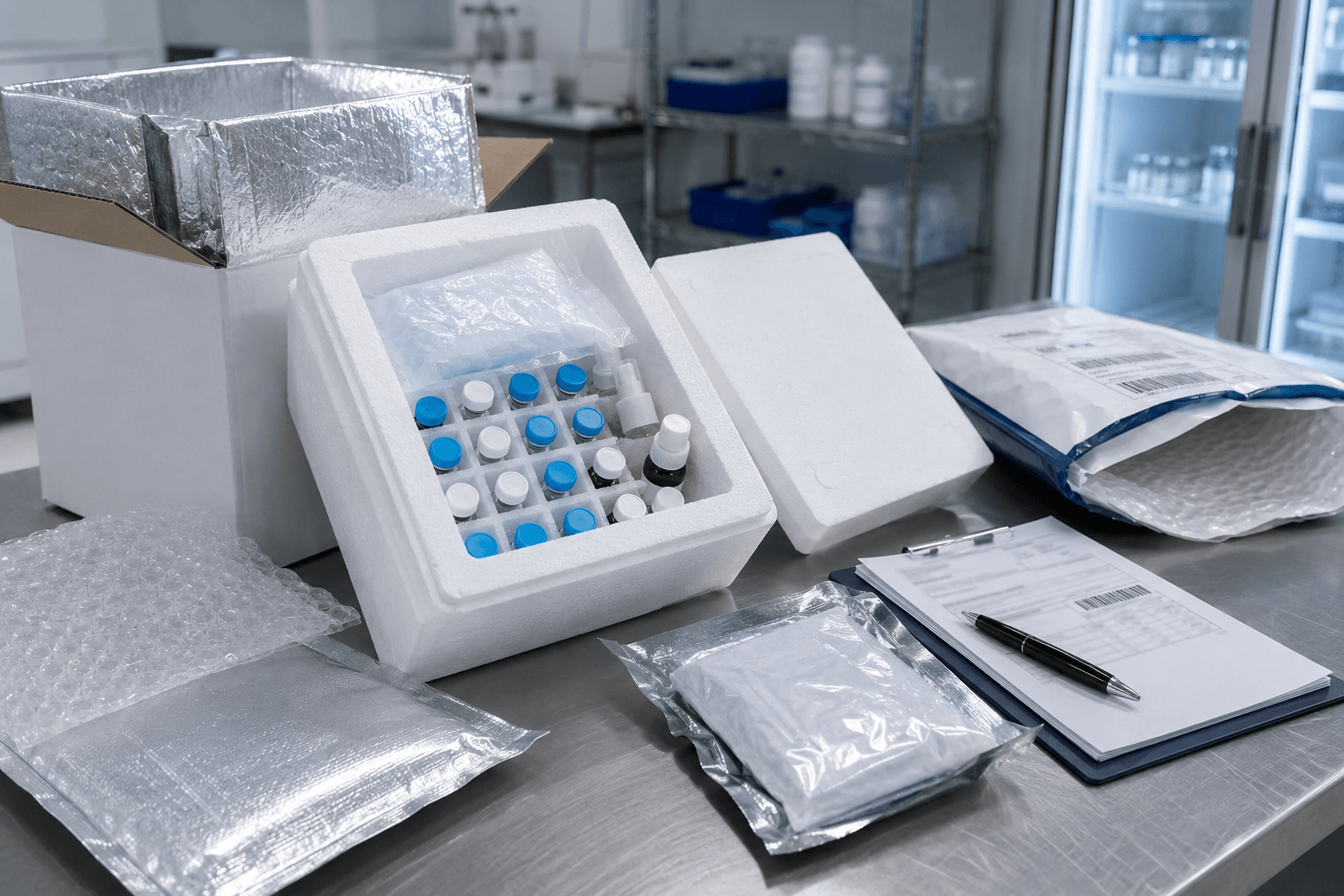
A peptide might be synthesised to perfection, subjected to the most rigorous testing, sealed under optimal conditions — and then go bad in a cardboard box on a warm loading dock for three days. Shipping, the aspect of the supply chain that most people only consider when problems arise, is approached by Peptide Works with as much seriousness as synthesis and quality control.
All orders are designed for optimal packing stability. Peptides in lyophilised form are less sensitive to temperatures compared with liquid solutions, but that does not simplify the task — protection from high heat during a hot summer day or lengthy delivery time is very important even for dry powders. Pre-mixed solutions and nasal sprays are already in a liquid state and thus require higher levels of thermal management, including insulated packaging and cold-chain requirements where appropriate.
Beyond temperature, physical protection matters. Peptide vials are glass, and glass does not tolerate rough handling. Packaging with cushioned inserts keeps vials from touching one another during transport. Anyone who has ever received a parcel from abroad only to find broken vials and spilled contents knows exactly why this is important.
Peptide Works ships globally, but international orders have their own set of factors. Customs paperwork is arranged so that the contents are labelled as research-grade compounds, with broadly accepted naming and categorisation that customs agencies will recognise. Discreet external labelling ensures professionalism while accurately identifying what is inside. The desired outcome is a smooth shipment with cleared customs and no delays or issues getting the materials to their destination facility.
All orders include tracking information so that researchers can follow their shipment from dispatch to delivery. This may seem like a trivial detail, but in practice it can make the world of difference when waiting for compounds needed to begin a time-sensitive protocol. Whether there is a customs hold, a delivery attempt failure or any transit issue, Peptide Works support is reachable and responsive.

The customer base of Peptide Works may be broader than expected. Peptide research is not limited to the laboratories of pharmaceutical companies; it also occurs in university departments, research units attached to hospitals, independent contract research organisations, veterinary research facilities and private laboratories established by individual scientists pursuing particular avenues of investigation.
There are many academic researchers in the Peptide Works community. They are postdocs, principal investigators and graduate students with funded projects that depend on sourcing compounds from somewhere reliable. For many academic laboratories operating under extremely tight budgets, purity becomes even more critical — when funds are scarce, you cannot afford to waste an entire experimental run on a compound that may be degraded. Peptide Works supplies the documented quality assurance that not only satisfies the researcher, but also meets the institutional procurement guidelines governing how university research funds are spent.
From biotech start-ups to established contract research organisations, private laboratories depend on Peptide Works for consistency from a supplier with a predictable catalogue and orders where quality does not vary. A CRO conducting studies for a pharmaceutical client needs the confidence that the BPC-157 they order this month is analytically identical to the BPC-157 they ordered last quarter. That kind of reproducibility starts at the supply end.
Independent researchers — people performing real peptide studies outside of a standard institution — are also valued customers. Whether working in new areas, doing exploratory work with the potential to lead to larger funded endeavours, or answering particular research questions in a private laboratory setting, they still require the same level of quality compounds and documentation that a large institution would demand.
Whatever group you belong to, the one thing that remains constant is that Peptide Works products are sold for laboratory research use only. The company does not make therapeutic claims, does not sell products for human or animal treatment, and does not market any kind of pharmaceutical. Responsible sourcing, accurate labelling, and clarity of intended use are non-negotiable foundations of the entire operation.

Researchers are a naturally sceptical group — it is part of the job. Their choice of peptide provider is hardly ever due to an enticing advertisement or a polished website. It comes down to whether the product worked, the documentation was accurate, delivery was on time and the repeat order was no worse than the first one. In this industry, promises will get you nowhere; repeat business needs to be earned through consistency.
A practical advantage that researchers see right away is the breadth of the Peptide Works catalogue. Instead of ordering from three or four different suppliers — one for secretagogues, another for neuropeptides, a third for accessories — a laboratory can get everything from one source. This is not just a convenience matter. It is a quality-control issue. For every new supplier a researcher brings into their workflow, they bring in a new set of unknowns. A single trusted source reduces that risk.
In addition, most compounds are offered in multiple delivery formats, adding another dimension to their applicability. A researcher may start working with lyophilised vials for initial dose-finding activity, move to pre-mixed solutions when scaling up to a protocol needing more frequent dosing, and later order nasal spray when designing a study targeting the intranasal bioavailability of the compound. Peptide Works offers that flexibility while keeping the researcher from searching for a new supplier at every stage.
Another reason researchers come back is the documentation that accompanies every order. The Certificates of Analysis received with each purchase are not generic — they represent a batch-by-batch record of what has been received. This documentation is valuable for researchers who need to show the source when writing a publication, applying for a grant, or simply completing regulatory paperwork. Those with experience of being let down by suppliers whose purity assertions were more aspirational than analytical appreciate this level of accountability.
Dependability in punctual deliveries is more critical than most realise. Every missed delivery, every damaged shipment, means money lost — but more than that it means time lost, and in research time is often the most scarce resource one has. Peptide Works has designed its logistics around getting orders out the door as quickly and properly packed as possible, while also keeping researchers informed during transit. When issues occur, you work with real people instead of an automated support queue.
The support team behind Peptide Works is also worth mentioning for how responsive they are. Researchers sometimes need guidance on which compounds to select, how to store them or how to reconstitute for a particular protocol. Having a support team that can answer real questions — rather than just read from a script — makes all the difference in the day-to-day research experience.

There is nothing particularly glamorous about running a peptide supply company well. It means sourcing synthesis partners and setting high expectations, spending money on third-party testing, packaging products securely enough to survive international shipping routes, and maintaining an up-to-date catalogue even as research trends change and new compounds emerge from the literature. There is no shortcut through any of it, and companies that take one will eventually be exposed — usually when a researcher's results do not make sense.
Peptide Works does this work because it matters. With every vial, with every pre-mixed solution, with every nasal spray that leaves the facility comes an implicit guarantee: this substance is what the label says it is, at the purity the COA confirms, in a state suited to produce repeatable research. Each and every order keeps that promise alive, and there is no other kind of promise in this industry that matters.
The catalogue will continue to expand as new peptides become available for research and new compounds are developed to investigate the effects of certain peptide sequences. The quality standards will not change: 99% pure, tested by a third-party laboratory, fully documented. And the commitment to serve the research community with deep integrity, transparency and respect for the work being conducted remains positioned exactly where it has always belonged — at the heart of everything that is Peptide Works.
Researchers devote their time and funding, as well as their professional reputations, to the studies they design. To at least assure that compounds will merit that investment is the least any supplier can do. Peptide Works takes that obligation seriously — not as a tagline, but as an everyday practice.
All products offered through Peptide Works are strictly for research and laboratory use only. They are not intended for human or animal consumption, ingestion, or therapeutic application. The information, data and materials presented are for scientific analysis and academic purposes solely and are not intended to diagnose, treat, cure or prevent any illness or medical condition.