Pharma Lab supplies high-quality, analytically verified peptides to scientists, laboratories and academic institutions around the world. Every compound is HPLC purified, mass spectrometry confirmed, and sourced directly from manufacturers.

Pharma Lab is a supplier of high-quality research-grade peptides to scientists, laboratories and academic institutions internationally. That line is not a tagline or marketing slogan. This is simply how we operate, and everything on this page exists to show how we do it and why that matters for your work.
If you have ever sourced peptides for research, you will likely recognise a familiar frustration. You place an order with a supplier, the vial arrives, and you have no reliable way of knowing whether the compound inside actually contains what they claim at the level of purity they state. Perhaps the results from your assay are inconsistent, and you begin wondering whether the issue lies with your protocol or with the peptide itself. That uncertainty is costly. It wastes time, depletes funding and, worst of all, it erodes your confidence in the materials you are working with.
As the founding team behind Pharma Lab, we felt researchers deserved more than educated guesswork. All peptides we provide are synthesised under controlled conditions, purified by high-performance liquid chromatography and validated through mass spectrometry analysis — well before they reach your bench. We work exclusively with the manufacturers that produce our peptides. We never purchase bulk, unverified stock from third parties or middlemen, and we never will. This approach gives us oversight of each step in the manufacturing process, from the selection of raw amino acids to the final lyophilisation.
To keep things focused, our catalogue features only peptides. We are not spread thin across dozens of product lines. This is the standard of purity we can uphold because peptides are what we know, and this is where all of our expertise and resources are directed. Pharma Lab stocks everything from standard peptide vials for commonly used protocols to more specialised formulations like nasal sprays or pre-mixed pens, shaped by the practical requirements of working researchers.
Product is shipped to laboratories and institutions around the world, with each order leaving our facility with full tracking so you know exactly where your materials are at all times during transit. But shipping logistics are only worthwhile if the product in the box is something you can rely on. That is why quality always comes first for us, and everything else follows from there.
On the rest of this page, you will find a clear overview of who we are, what we do, how we ensure quality and why Pharma Lab may be the right choice to fulfil your peptide supply needs. No exaggeration, no empty promises. Only the information you need to decide whether we are suitable for your research.
A peptide is a short chain of amino acids joined together by peptide bonds. If that sounds like something from an undergraduate biochemistry lecture, that is exactly what it is. However, the simplicity of that definition masks a remarkable degree of complexity. Peptides are not simply smaller versions of proteins. They occupy their own distinct and important space within biological science, and understanding that space is essential if you intend to work with them in a research setting.
The distinction between a peptide and a protein often comes down to size. Peptides typically contain between two and fifty amino acids, while proteins are longer polypeptide chains that fold into elaborate three-dimensional structures. Still, size is only one part of the picture. Peptides behave differently from proteins. They tend to be more flexible, can interact with receptors in ways that larger molecules cannot, and are able to cross biological barriers that proteins struggle to penetrate. This combination of properties makes them extraordinarily useful as research tools.
Your body produces peptides naturally. They play a central role in virtually every biological system you can name. Hormonal signalling, immune defence, tissue repair, inflammation, metabolism, pain modulation and cellular communication — peptides are involved in all of these processes. For example, insulin is a peptide hormone. Oxytocin is a peptide. The endorphins that influence pain perception are peptides. When researchers set out to investigate any of these systems at a molecular level, they often turn to synthetic peptides that mimic or modify the actions of their natural counterparts.
Synthetic peptides are produced using solid-phase peptide synthesis, a method that allows chemists to assemble amino acid chains in a precise, controlled sequence. The value of this process lies in its specificity. Researchers can obtain a peptide with an exact amino acid sequence, tailored to fit their experimental needs. This high degree of precision is what makes synthetic peptides so valuable. Rather than working with extracts from biological tissue — which can introduce variability — you are working with a compound that has been built to specification.
Research applications of synthetic peptides are extensive. They are used in receptor-ligand interaction studies, for developing assays in drug discovery, for exploring cellular signalling pathways, and for understanding the mechanisms of disease — from metabolic disorders to neurodegenerative conditions. In immunology, synthetic peptides are employed to study antigen recognition. In pharmacology, they serve as lead compounds for therapeutic development. The versatility is remarkable, and it is one of the key reasons why demand for high-purity research peptides continues to grow each year.
This is where Pharma Lab fits into the picture. We are here to provide the peptides researchers need, held to the standards of purity and consistency their work demands. A peptide that falls short on purity is not just a missed opportunity. It is a variable that can compromise an entire study. Sourcing your peptides from Pharma Lab removes that uncertainty, providing a solid foundation so that your research can produce meaningful, reproducible results.

There is a trust problem in the research peptide market, and anyone who has worked in it for long enough knows exactly what that looks like.
Consider this scenario. A postgraduate student places an order online with what appears to be a reputable supplier. The product arrives, labelled with 98% purity, and the researcher begins their experiment. But the results are off. The dose-response curve does not match published data. Control samples behave in unexpected ways. Weeks of work are suddenly in question, and the researcher is left wondering whether the problem lies with their methodology or with the vial they received. More often than not, it is the vial.
We have heard that story too many times. Researchers spending real money and real hours on peptides that did not meet the claims made on the label. The worst part was that many suppliers made it nearly impossible to verify those claims. Certificates of analysis were vague or missing altogether. Purity data was self-reported, without any independent verification. The supply chain itself was opaque, with multiple intermediaries standing between the peptide manufacturer and the end user.
That is why Pharma Lab was created. The concept was straightforward and remains so. Work directly with trusted manufacturers. Apply rigorous, standardised analytical methods to test every batch. Publish honest purity data. Then allow customers to verify that data independently through any third-party laboratory they choose.
We never set out to be the largest peptide supplier in the world. The goal from day one was to be one that scientists could genuinely rely on. Since then, every decision we have made — from the manufacturers we partner with to how we package and ship orders — has been guided by that original purpose. A researcher ordering from Pharma Lab should never have to question whether the peptide in their vial matches what appears on the label. That should be a certainty, not a gamble.
Pharma Lab provides a focused research peptide catalogue specifically designed to support a range of experimental protocols. We only stock compounds based on genuine demand from the research community. We do not carry products simply for the sake of expanding the catalogue. If something is on our shelves, it is because researchers requested it and we were able to supply it to the quality standard required.
The standard peptide vial sits at the core of our product line. Each vial contains the peptide in lyophilised form — a highly pure, shelf-stable powder that allows for straightforward storage and extends the usable life of the compound. Lyophilisation is more than a packaging convenience. It serves as a preservation method, protecting the molecular integrity of the peptide during both storage and transport. When lyophilised correctly and stored under appropriate conditions, a peptide will remain potent for extended periods.
When you are ready to use the peptide, the powder is reconstituted in a suitable solvent — typically bacteriostatic water, which Pharma Lab also supplies. Reconstitution is a simple procedure, but it is important to carry it out correctly to maintain the biological activity of the compound. We provide clear handling instructions with every order, and our website offers detailed reconstitution guidance for researchers who would like additional reference material.
During lyophilisation, a nitrogen flush is performed on the vial to help remove residual contaminants, which can influence the visual appearance of the powder. You may notice minor variations in the look of the cake from one batch to another. This is entirely normal and does not indicate any change in purity or potency. Each vial is filled using automated equipment that delivers precise, uniform amounts of product.
Certain study protocols call for peptide delivery in a nasal spray format. A metered spray product is available through Pharma Lab, enabling accurate dosing that may be useful in studies investigating mucosal absorption, bioavailability or delivery kinetics. The nasal spray format eliminates the need for reconstitution and manual dosing, which can reduce laboratory preparation time and limit the potential for errors during the process.
Our nasal spray peptides are manufactured under the same rigorous quality standards applied to all of our vial products. The peptide in solution is formulated to maintain stability within the spray delivery system, and each unit is assayed to confirm that the dose delivered per actuation meets its stated specification.
Pre-mixed peptide pens are another example of making research materials more accessible and practical. These pens contain the peptide in a pre-reconstituted solution housed within a pen-style delivery device. For research teams running protocols that involve repeated, precise dosing, pens can substantially reduce preparation time and improve consistency across administrations.
Beyond convenience, there is a practical quality benefit. Pre-mixed pens reduce the number of handling steps between product and application, creating fewer opportunities for contamination and dosing error. They are manufactured and filled in controlled environments, and the peptide solution they contain is held to the same purity standard as any other product we offer.
Capsules represent an important formulation within peptide research, particularly when oral bioavailability and gastrointestinal absorption are the focus of study. Delivering peptides through the oral route presents inherent challenges: peptides are susceptible to enzymatic degradation in the digestive tract, and capsule-based research helps to examine and work toward overcoming those barriers.
Pharma Lab supplies peptide capsules for researchers working in this area. Each capsule is produced to contain a predetermined concentration of the target peptide, and every batch undergoes the same quality controls applied across all of our formulations to ensure that both dosage and composition remain consistent.
In addition to our peptide products, Pharma Lab offers supporting research materials that complement the catalogue. The most commonly requested item is bacteriostatic water, which is used for proper reconstitution of lyophilised peptides. All of our bacteriostatic water meets clinical-grade standards and is supplied in sterile, sealed vials to prevent contamination from the point of manufacture through to use in the laboratory.
We continuously review our range and add new items as needed. The catalogue is shaped by the requirements of our active research community, and we remain responsive to suggestions and feedback from the scientists and institutions that rely on our services.

We do not position quality as a feature. It is the reason we exist. Pharma Lab would not be in the business of supplying peptides if we could not verify that they are pure and consistent, every single time. That may sound like a strong statement, but for a researcher whose work depends on the integrity of their materials, it is simply common sense.
There are two primary analytical methods we apply to every batch of peptides that passes through Pharma Lab: high-performance liquid chromatography and mass spectrometry.
HPLC is the gold standard method for peptide purification and purity analysis. In essence, the peptide sample is dissolved and passed through a column containing specific packing material. Because different components of the sample travel through the column at different rates — according to their particular chemical properties — the target peptide can be separated from impurities, truncated sequences or synthesis by-products. This produces a chromatogram: a visual output that shows the composition of the sample and the relative proportions of each component. A clean chromatogram with a single dominant peak indicates high peptide purity.
Where HPLC tells you how pure the sample is, mass spectrometry confirms the molecular identity of the peptide. It measures the mass of the compound with precision and compares that measurement against the expected value for the given sequence. If the values match, the synthesis has produced the correct molecule. If they do not, the batch does not ship.
Pharma Lab maintains a purity standard of approximately 99% for standard peptides. For more complex sequences — such as longer chains or peptides with unusual modifications — the baseline purity is 98%. These are not aspirational figures. They are actual, verifiable numbers supported by analytical data for every product we supply.
What does purity mean in practice for your research? Consider a scenario in which you are running an experiment that depends on a specific concentration of a particular peptide. If the product you receive is only 90% pure, then 10% of what is in the vial is not what you expect. That 10% might consist of truncated sequences, deletion products or other synthesis artefacts. In a sensitive assay, those impurities can reduce the reproducibility of your results and are extremely difficult to identify and account for. Higher purity leads to cleaner data, which in turn produces more reliable and accurate outcomes.
Pharma Lab does not source peptides from wholesalers or third-party distributors. We work directly with the facilities that synthesise our products. This is not a minor operational detail. It is fundamental to how we verify and stand behind what we supply.
Purchasing through a long chain of intermediaries removes visibility over where the product originated, how it was produced, and how it was handled between production and delivery. Every link in that chain introduces risk. Was the product stored correctly? Was it repackaged? Was the original manufacturer held to a sufficiently high standard?
By working directly with manufacturers, we remove those questions entirely. We know the synthesis protocols that are used. We oversee quality control practices at the manufacturing site. And if a question arises, we can trace any batch back to its source. Not every supplier has this level of transparency, and it is one of the defining aspects of working with Pharma Lab.
There is something that not every peptide supplier will tell you: we encourage independent testing of our products. Send a sample to any reputable third-party laboratory and run whatever tests you wish. Whether that means HPLC, mass spectrometry, amino acid analysis or MALDI — trust the method that gives you confidence. We welcome that level of scrutiny because we know what the results will show.
We also provide comprehensive documentation with our products, including recommendations for storage and handling. Maintaining the quality of a peptide is a shared responsibility. Proper storage is a significant part of that equation, because a peptide that leaves our facility at 99% purity should arrive at your bench at 99% purity.
Pharma Lab serves a broad cross-section of the scientific research community. However, we have never treated our customers as a single, undifferentiated group. A university postgraduate student and a pharmaceutical research and development team running a multi-site study under significant funding have very different requirements. We understand those differences and approach each accordingly.
University laboratories operate under constraints that many commercial facilities do not face. Budgets are limited. Timelines are tightly bound to grant schedules. A single failed experiment can delay a project by months. For an academic researcher, the reliability of materials is not a luxury — it is non-negotiable. You may have spent a year securing funding, and you cannot afford to waste any of it on peptides that underperform. Pharma Lab takes that reality seriously. Regardless of order size, we supply peptides to the same quality standard. A ten-vial order for a student writing their thesis receives the same care as a hundred-vial order for a corporate laboratory.
Biotech and pharmaceutical research teams require something that academic labs also value but at a different scale: batch-to-batch consistency over extended periods. If you are running studies that span months or even years, the peptide you use at the outset must be chemically identical to the peptide you use twelve months later. Variation between batches introduces a confounding variable that can affect the validity of the entire study. It is our direct manufacturing relationships and rigorous batch testing that deliver this consistency. We maintain detailed records of every batch and can provide comparative analytical data across production runs for customers who request it.
Independent labs often require a flexibility that larger operations may take for granted. Smaller quantities, fast turnaround and responsive support when questions arise. Pharma Lab has built its operations to remain accessible to laboratories of all sizes. We do not impose prohibitive minimum orders, and our support team is available to ensure that questions are answered promptly. If you are a smaller lab doing meaningful work, we want your supply side to be the least of your concerns.
Peptide suppliers that understand regulatory expectations and documentation requirements are an essential resource for clinical research organisations. Pharma Lab products are intended for research purposes only, but we appreciate that the regulatory environment within which CROs operate demands precise record-keeping and traceability. Our documentation practices reflect this standard. Every product we supply is accompanied by batch descriptions, and we maintain full records enabling any order to be traced back to its manufacturing origin.
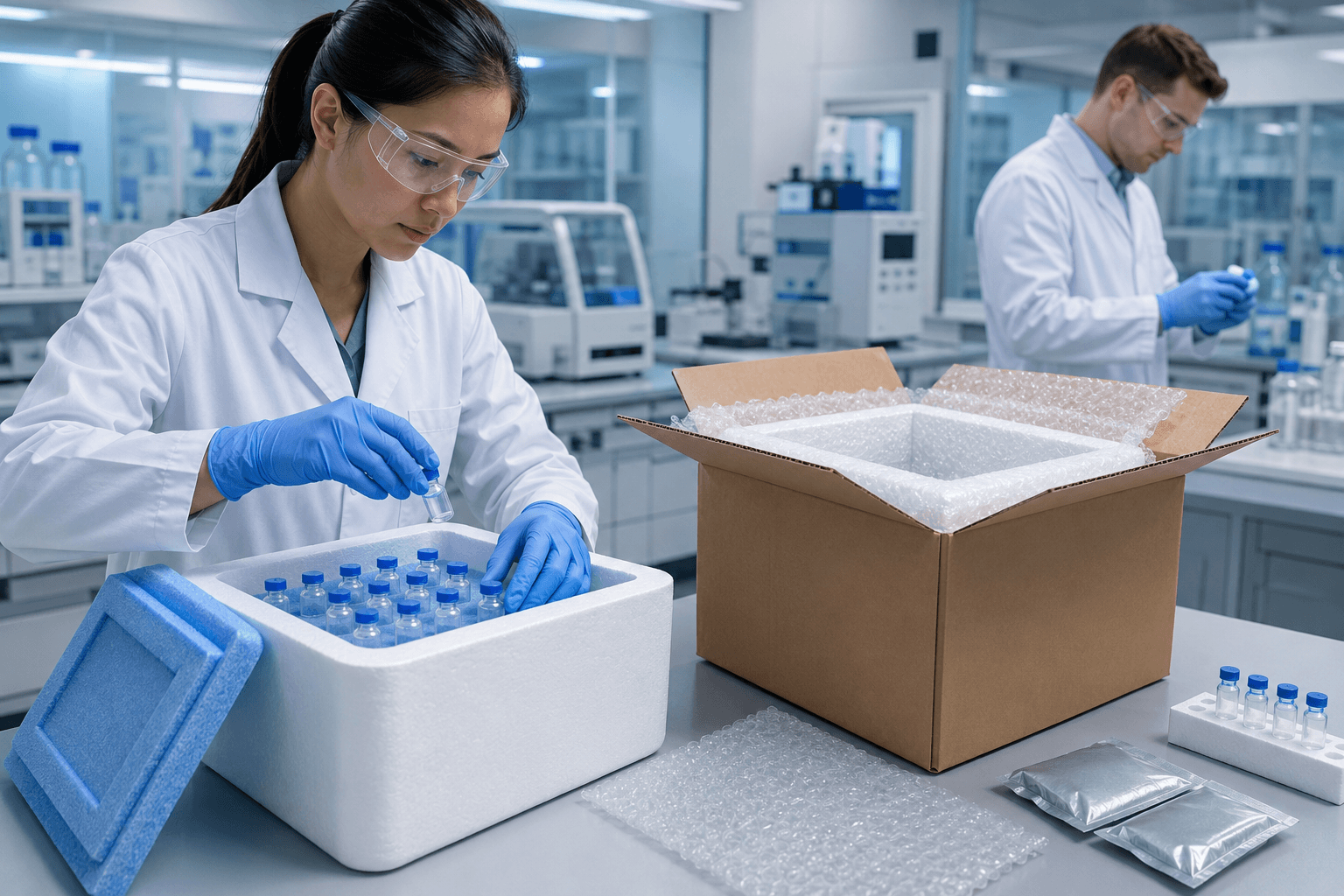
We take the delivery of peptides from our facility to your laboratory just as seriously as we take manufacturing them. A peptide that meets purity specifications at the point of dispatch must arrive in that condition, and achieving that depends entirely on how it is packaged, shipped and tracked.
With confirmed payment, most orders are dispatched within 24 to 48 hours. Any orders placed over the weekend are processed first thing on Monday morning. We understand that timing matters in research. Experimental schedules can be affected by delivery delays, and we have structured our operations accordingly to minimise that risk.
Every order is carefully packed before leaving our facility. Vials and other products are secured in protective materials to ensure safe transportation. We use plain, unmarked packaging that does not reveal the contents. Your name and address appear on the package, but nothing else indicates what is inside. We follow this practice because we understand that discretion is important for many of our customers, and because it reflects the appropriate way to handle research materials.
Your shipment is sent with full tracking, and a signature on delivery is required. This means you can follow your order from the moment it leaves our premises to the point it reaches your location. Once your order is dispatched, you will receive tracking information so you can monitor its journey through each transit point.
Pharma Lab serves researchers and institutions around the world. Delivery times depend on your location and the shipping option selected. Premium shipping typically arrives within three to five days, while standard international shipping takes ten to fourteen days. Optional shipping protection is available. If your order is damaged in transit or lost and you have opted for this protection, we will replace it. Should the replacement also fail to arrive, a full refund will be provided. When you place your trust in Pharma Lab, the burden of transit problems should not rest on your shoulders.
For peptide shipments, we assess the temperature conditions in the packaging. Lyophilised peptides are generally stable during transit. However, appropriate insulation and packaging techniques are used to ensure that external factors during shipping do not negatively affect product integrity. If your location or institutional protocols require specific shipping arrangements, we are happy to work with you to determine the best approach.
Pharma Lab is a peptide supplier, but we have never been comfortable being only a distributor. We believe that the researchers we work with should have access to reliable, well-sourced information about the compounds they are studying. This is why we have dedicated considerable effort to developing support content that serves the wider research community.
Our website features a growing library of articles covering all aspects of peptide science. These include detailed profiles of individual peptides, outlining their amino acid sequences, known mechanisms of action and published studies. These profiles are designed to help scientists who are encountering a compound for the first time as well as those who are looking for a concise reference.
In addition to peptide profiles, we publish articles that address the fundamentals of peptide science. Topics covered include the basics of solid-phase peptide synthesis, an overview of common analytical techniques used to determine purity and identity, a guide to reconstituting peptides properly, and best practices for peptide storage. Every article is written by individuals who understand the science and care about accuracy in the details. Our content is not produced to attract search traffic through thin, keyword-driven material. Each piece is written to deliver genuine value to someone engaged in research work.
We also offer practical guides and case studies that answer the day-to-day questions researchers encounter when handling peptides. What is the best way to store lyophilised peptides to maintain stability over time? Which solvent should you use to reconstitute a particular compound? Why might a peptide cake in one vial look different from a previous order? These are the types of questions that often fall outside the scope of academic literature, and we aim to address them in an accessible, straightforward manner.
All educational content published by Pharma Lab is provided for informational purposes only. No therapeutic claims, clinical applications or medical advice is included. Our articles are intended for responsible researchers, to support informed decisions about the materials they work with. If our resources have been helpful to you, we consider that a successful outcome. We are always open to suggestions from the research community about topics you would like us to cover.
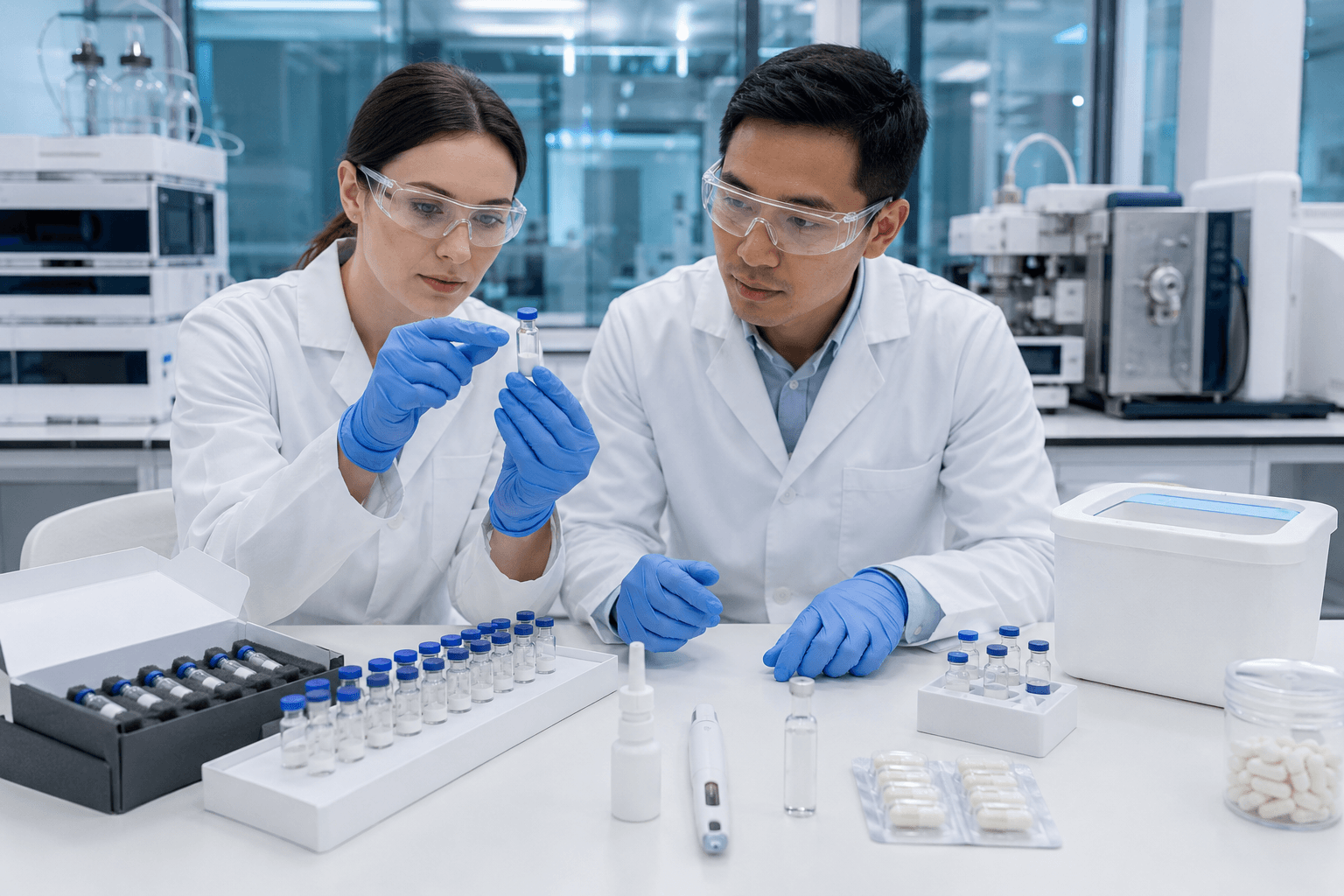
Over the years, we have received thousands of questions from researchers at every career level. Certain questions come up time and again, and rather than burying them in a small section at the bottom of the page, we want to address them here directly in an open, honest way.
One of the most common questions concerns purity percentages and what they mean in real terms. When we say a peptide is 99% pure, it typically means that in a 100 mg vial of material, approximately 99 mg consists of the target peptide and no more than 1 mg is attributable to other compounds — most commonly truncated sequences or synthesis artefacts. That remaining 1% is largely inert and not a concern for most research applications. However, in sensitive assays, even a small amount of impurity can introduce variability. This is why we maintain the highest purity we can achieve and provide analytical data so you can determine whether a product meets the specific threshold required by your protocol.
Another frequent question relates to storage. Lyophilised peptides should be kept in a cool, dry environment. A standard refrigerator at 2 to 8 degrees Celsius is suitable for general storage. For longer-term preservation, a freezer at minus 20 degrees Celsius or below is recommended. Once a peptide has been reconstituted, it should generally be used within a defined timeframe and stored according to the specific guidelines for that compound. Every order includes storage instructions, and more detailed information is available on our website for each individual peptide.
Researchers also ask about the visual appearance of lyophilised peptides. Lyophilisation is a process that removes liquid from a product, and the resulting powder can vary in appearance depending on a number of factors. Sometimes it appears as a compact white disc. Other times it may look fluffy, adhere to the sides of the vial, or arrive as a loose powder if the cake has shifted during shipping. All of these variations are normal and do not affect the quality or effectiveness of the peptide. Visual differences are influenced by the lyophilisation process, the nitrogen flush applied during manufacturing, the specific amino acid sequence of the peptide, and even the ambient conditions during production.
One of the more important questions we hear is whether our products can be independently verified. The answer, without qualification, is yes. We actively encourage customers to submit samples to any accredited third-party laboratory for testing. Analytical methods such as HPLC, mass spectrometry, MALDI and amino acid analysis are all appropriate approaches. We stand behind the integrity of the data we publish, and external validation strengthens the trust between ourselves and the researchers we support.
Researchers frequently ask how the different formulations compare and which is most suitable for their work. The answer depends entirely on your study design. Lyophilised vials offer the greatest flexibility, since the researcher determines the reconstitution conditions and dosing. The nasal spray format is well suited to protocols that depend on mucosal delivery and metered dosing. Pre-mixed pens are the best choice if you need to save preparation time while maintaining consistent delivery. Capsules serve studies focused on oral bioavailability. If you need guidance in choosing the right format for your protocol, we are available to help you through the decision.
Lastly, we are asked this more often than you might expect: why does Pharma Lab only supply peptides? The answer is focus. We prefer to do one thing well rather than many things to an average standard. Peptides are complex molecules that demand specialised expertise in synthesis, quality control, storage and handling. By concentrating on a single product class, all of our experience and resources are channelled in one direction — which makes it far easier to maintain the standards we have established than it would be if we attempted to uphold them across many different compound classes.
Pharma Lab was built on one clear premise: researchers need a peptide supplier that delivers exactly what it states. No inflated purity claims. No opaque supply chains. No compromises on quality at the production level. Simply well-tested, reliable peptides delivered to your laboratory in a ready-to-use form.
Every decision we make — every manufacturer we partner with, every analytical method we employ, every aspect of how we package and ship your orders — is designed to earn your confidence. We do not assume trust. We work toward it with every batch we produce and every order we fulfil.
Pharma Lab is here for researchers who want their peptide supplier to hold quality to the same standard they demand in their own work. We welcome your questions, your feedback and your suggestions. We are listening, and we are here to support your research.
Thank you for taking the time to learn about Pharma Lab. We look forward to supporting your work.