 Family Mediator
Minutes one to three
Write down the subject in a single line: the children's routine, a house sale, a change to an old arrangement. Choose words you would be comfortable saying aloud.
Telephone enquiries
A short guide to ringing us for the first time: how to prepare, what to ask and what can happen afterwards.
To book, you ring 0330 010 0028. There is no online calendar, no form to complete and no payment to make on this site.
A call is an enquiry. An appointment exists only once a date, a format and any charges have been clearly confirmed to you during that conversation.
We chose to describe it this way because the word "booking" can suggest something more settled than a first telephone call really is. When you ring, you are opening a conversation. You can ask what mediation involves, describe in general terms what has been happening, and find out what the next step could be. You are not signing up for a course of sessions, and you are not committing another person to anything.
Think of the call as having three parts, although real conversations are rarely so tidy. First, you explain why you are ringing, in as much or as little detail as feels right. Next, you hear how the service could work for a situation like yours, and you ask your questions. Finally, you find out what could happen next and decide whether you want it to. That may be arranging a first meeting, taking time to think, or concluding that a different kind of help is needed.
If an appointment is arranged, make sure you are clear on the details before the call ends. Note the date, the format, what it is for, what you need to bring and what it will cost. If something has not been stated, it is reasonable to ask for it to be repeated. A clear understanding at this point saves confusion later on, especially when so much else may be going on.
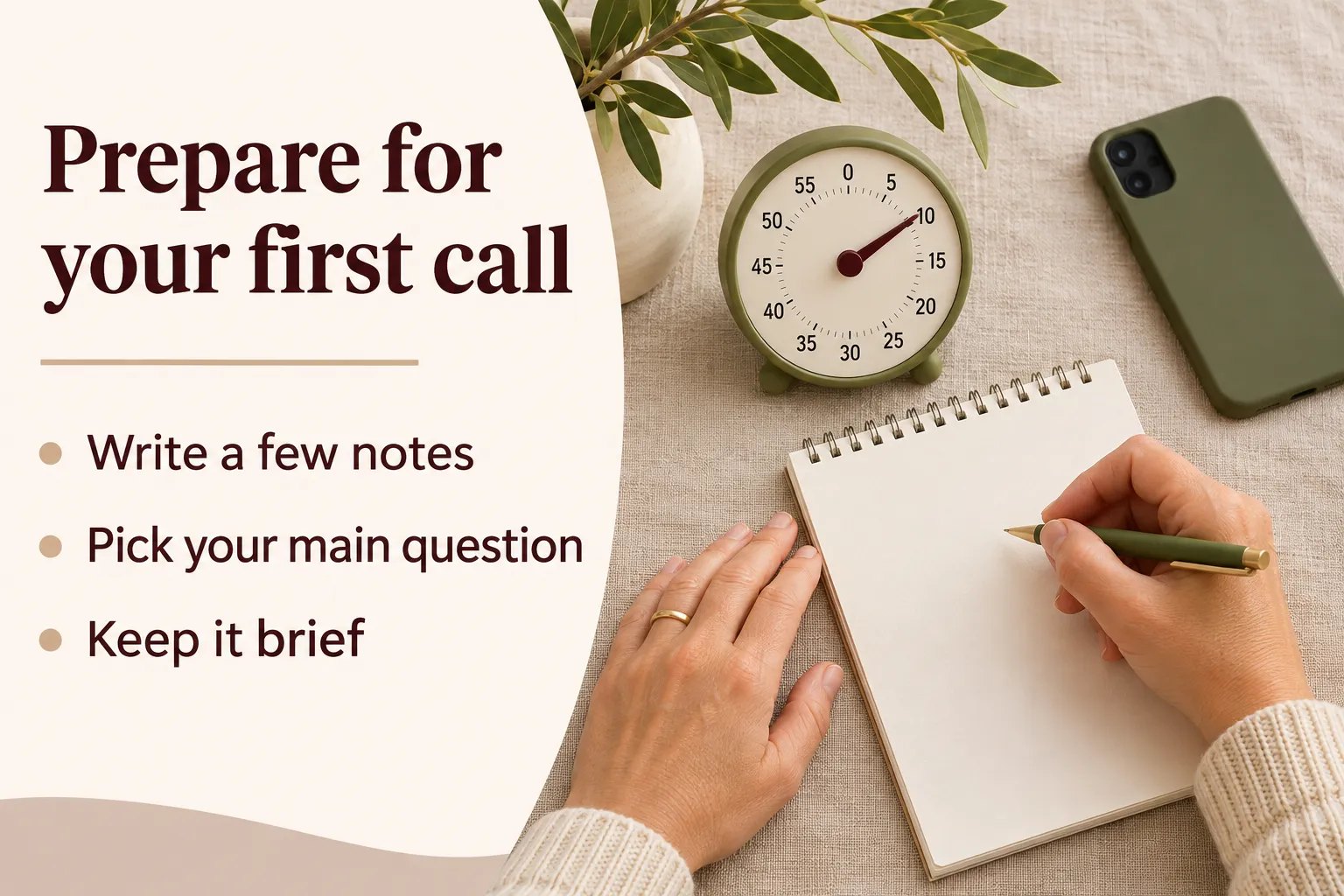
There is no need to assemble a file. A few notes on one side of paper are generally more useful than a detailed history, and they will help you remember your questions if the call feels stressful.
If your note runs to several pages, try to reduce it to the one thing you most need to find out from this call. The rest can wait for a later conversation.
Write down the subject in a single line: the children's routine, a house sale, a change to an old arrangement. Choose words you would be comfortable saying aloud.
List any date that matters, such as a school start, a house move or a court deadline, along with any practical need that could affect how you take part.
Write the question you would most regret not asking. Then add one more that you have been too embarrassed to ask anyone else. Both are welcome.
Before you dial, think about where you are and who could be listening. This is worth a moment's thought for anyone, and it is particularly important if you feel watched or under pressure at home.
You can simply say you have to go. You do not owe anyone an explanation, and you can ring back another time, from a different place, when you are able to talk.
A shared home, a family phone plan or a tablet that syncs to another device can all reveal more than you intend. If that is a concern, consider ringing from somewhere else, such as a friend's house or a private spot during a break at work. Call logs and itemised bills can also show a number you have rung. If you have any worries about being monitored, a specialist support service can talk you through safer ways of seeking help.
You can tell us at the outset that you need to keep the conversation short, or that you would prefer not to go into detail. It is enough to say, "I need to ask about suitability privately before anything is suggested to the other person." You do not need to give a full account in order to be taken seriously, and you should not feel you have to continue a call that has stopped feeling safe.
A telephone enquiry is not an emergency service. If you or someone else is in immediate danger, contact the emergency services. If there is an urgent concern about a child's safety, or you need protection from another person, do not wait for a mediation appointment. Legal advice and specialist support may be available much sooner, and those routes take priority over anything we have described on this page.
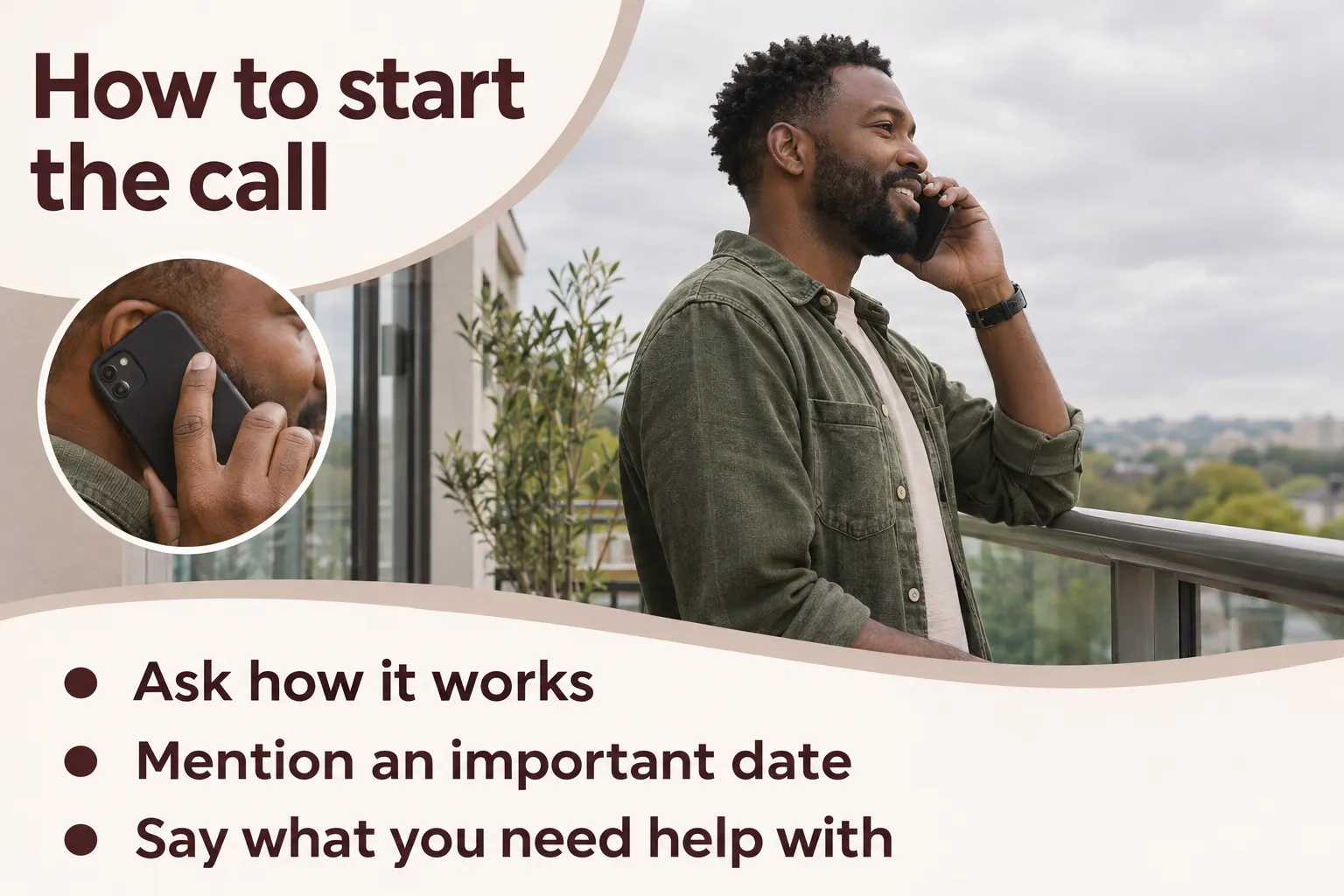
The first sentence is often the hardest. If you are unsure how to begin, you are welcome to borrow one of these and adapt it as you like.
"I don't really know whether this is what we need. Could you explain how it works, and then I'll tell you a little about what's going on?"
"I've got a date coming up that affects this. Can I tell you what it is and ask what mediation could realistically do before then?"
"A solicitor has mentioned a MIAM, or I've read that I may need one. Can you explain what it would involve and what I would need to do?"
"My former partner has suggested mediation and I'd like to understand it before I reply. Is it all right to ask you some questions first?"
Some people ring because they have been told they must attend a meeting before going to court. If so, mention that at the start, because it can shape what happens next.
A call, a MIAM, a joint session and a set of written proposals are separate steps. Before agreeing to any of them, ask which one is being offered and what it is meant to achieve.
In England and Wales, a person wishing to apply to the family court about children or finances will often have to go to a Mediation Information and Assessment Meeting beforehand, subject to certain exemptions. A MIAM is usually a private meeting in which a mediator explains how mediation works, considers whether it is suitable and discusses other options. Attending does not oblige you to go on to mediate, and it does not mean the other person has agreed to anything.
If you need paperwork connected with a court application, say so plainly and ask what can be provided and when. The rules on who must attend, who is exempt and what the court expects depend on your circumstances and may change. Exemptions can apply in certain situations, including some involving abuse or urgency, but we cannot tell you on an enquiry call whether one applies to you. A solicitor can advise you on that.
Please do not treat a call to us as stopping any clock. Ringing a mediation service does not extend a court deadline, pause a limitation period or stand in for a response you have been asked to make. If you have received court papers or a letter from a solicitor, take legal advice on it promptly, even if you are also considering mediation.
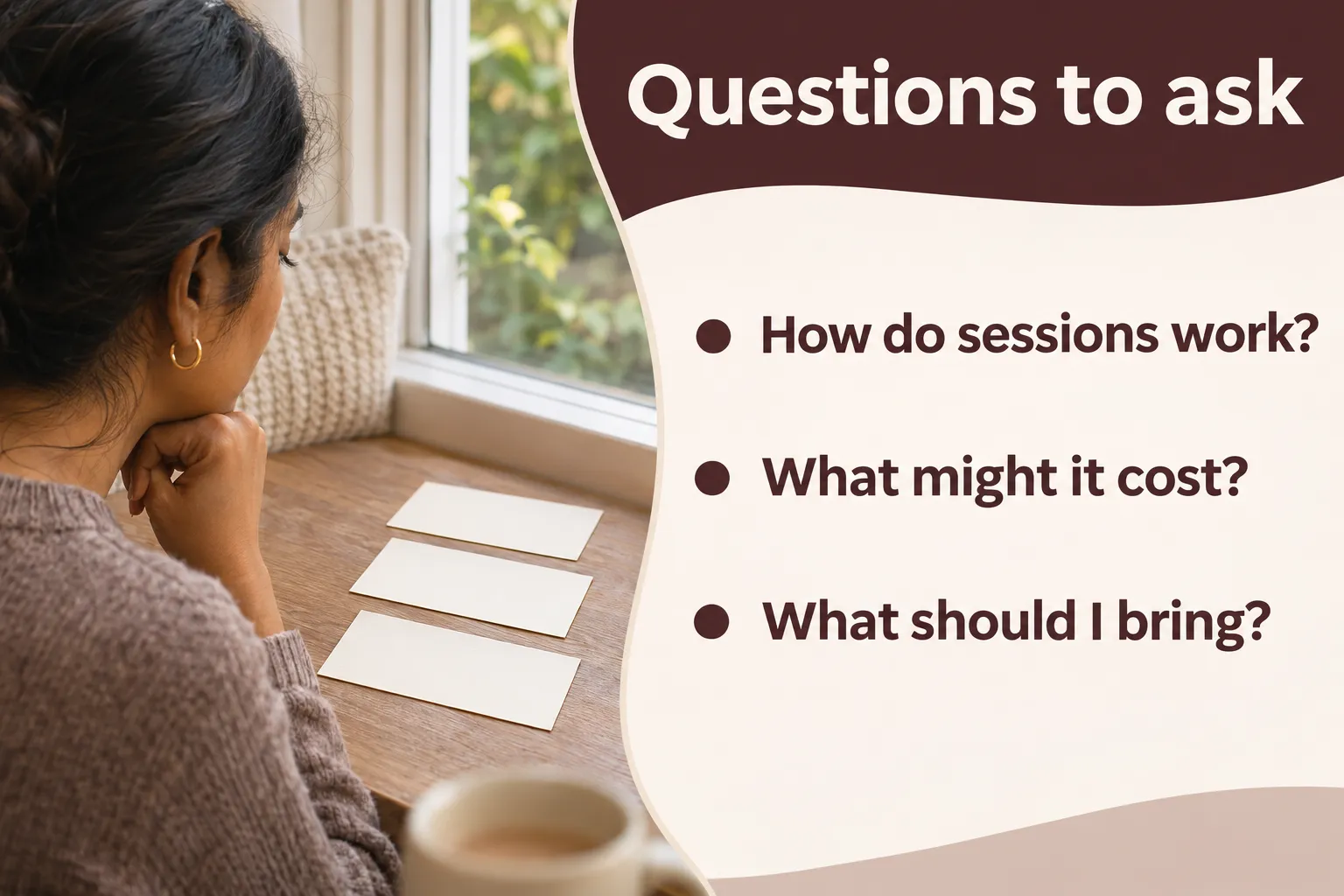
You are also deciding whether this service suits you. These questions are grouped by subject, so you can pick out the two or three that matter most at the moment.
A question that seems too basic is usually the one that clears up the most. If an answer leaves you unsure, say that it did not make sense and ask to hear it differently.
Money is often part of why people are looking at mediation, so please do not feel awkward about raising it. This website does not list prices, which means the telephone is where you should ask for them.
Ask for the charges to be set out clearly before you agree to anything: what the first meeting costs, how later sessions are charged, whether preparing documents is included and how the cost is divided if two people take part. If you are asked to pay for anything, you should understand exactly what for. It is also fair to ask for confirmation in a form you can keep.
The likely total depends on factors nobody can fully know at the outset, including how many topics are on the table, how complicated the finances are and how much time each of you needs. A person who gives you a firm overall figure on a first call may be guessing. A more useful question is what would make the cost go up or down, and what you could do to keep it under control.
Help with costs may be available to some people in some circumstances, for example through legal aid where someone qualifies. Do ask about this if it matters to you, and check that what you are told applies to you. Eligibility rules vary and can change, so we would not want a general statement on a website to stand in for an answer about your own position.
Taking part fairly may depend on practical matters that have nothing to do with the dispute itself. Mention them early, so that they can be considered before any meeting is arranged.
If English is not your first language, or if you find written material or quick conversation hard to follow, tell us. Ask what support can be arranged, and be cautious about asking a relative to interpret, particularly where the subject is sensitive.
Hearing or sight loss, mobility needs, chronic illness, anxiety and neurodivergence can all affect what a suitable session looks like. You can ask about shorter meetings, regular breaks, materials in advance or a different format.
Shift patterns, childcare and care for a relative can all limit when you are able to take part. Explain the real constraint rather than agreeing to a time you may not manage, then ask what could be arranged.
You might need to arrive separately, sit near a door or stay apart from the other person. You may simply need to know you can stop. These are reasonable things to mention, and you do not need to give a reason for each of them.
Not everyone reading this page started the process. You may have had a message from a former partner, or a letter suggesting mediation, and you may not have welcomed it.
Being invited to mediation does not mean that you have done something wrong, or that anyone has already taken a side. The person who rang first has no special status in the process, and they do not get to set the agenda alone. You can have your own private conversation before you decide whether to take part, and you can bring your own concerns to it, including concerns about whether mediation is a good idea at all.
It is sensible to find out what is being proposed, and whether anything is time-limited. In particular, if you have been told that court proceedings may follow, it is wise to take legal advice about your position instead of simply ignoring the invitation. Mediation is voluntary, but a decision not to engage can sometimes have consequences that you would want to understand beforehand.
You might also be worried that the mediator has already heard one version of events. It is a fair worry to raise. Ask how contact with each person is handled, and what the mediator has been told. You are also free to explain that you need more time, that you do not feel safe taking part jointly, or that you would like to hear about other formats.
A first call needs surprisingly little private information. Giving less at this stage is entirely reasonable, and in some ways it is better.
If particular information is needed later, ask what it is, the reason for it and the safest way of providing it. Please do not send documents to a contact route you have found elsewhere. This website lists one way of reaching us, the telephone number shown on this page, and it does not offer a way to upload anything. The Privacy Policy explains in more general terms how information from an enquiry may be handled.
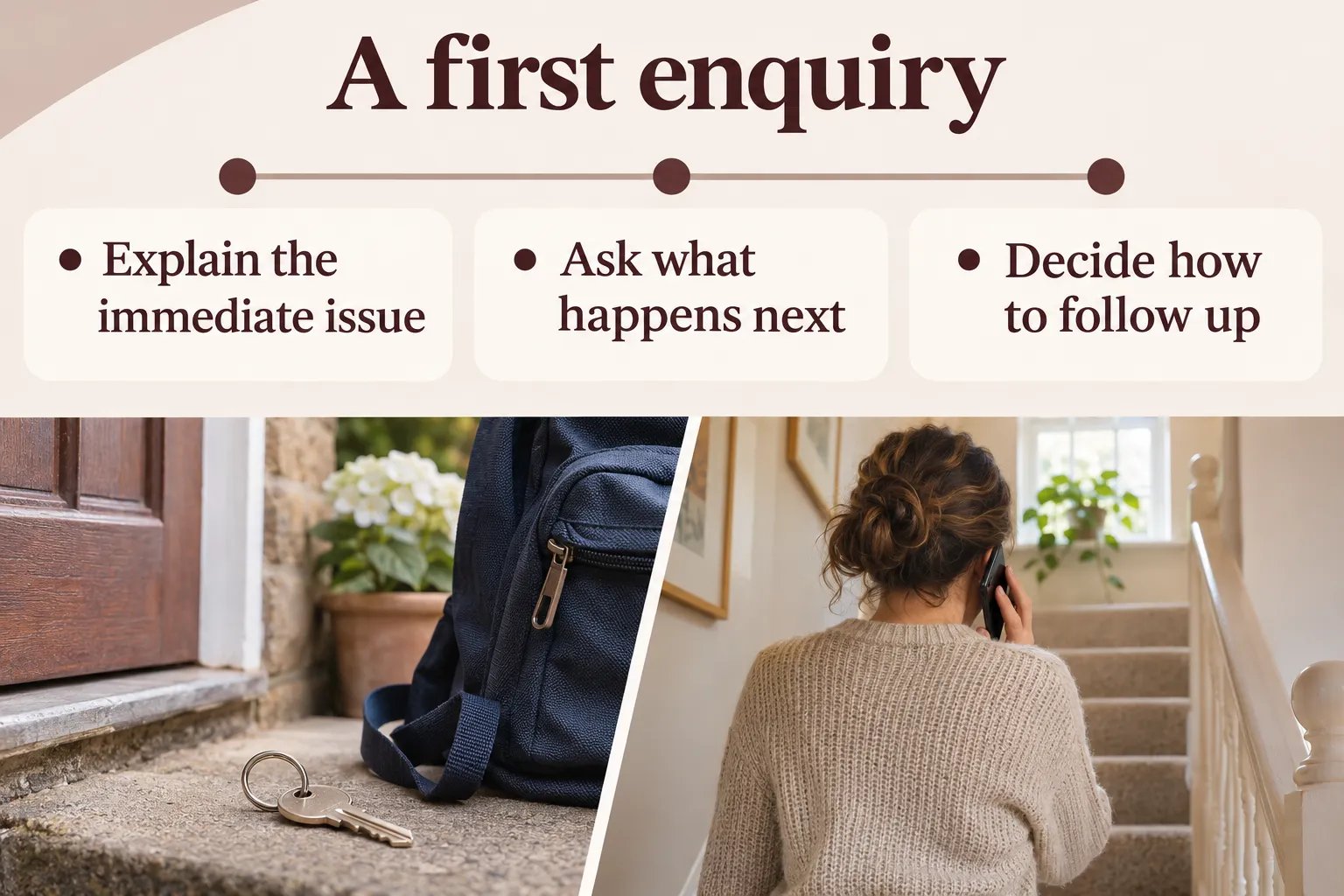
Here is how a first call might run. It is an invented example, written to show the shape of the conversation, and your own call may go quite differently.
A parent rings and explains that a holiday arrangement has broken down. They add that they would rather not give their former partner's details yet. That is noted, and nobody is contacted.
They hear how a first meeting works, that it would normally be held separately, and that mediation depends on both people being willing and on it being suitable. They ask about the fee and are told what it covers.
They ask whether they would have to sit in the same room. They learn that this is one of the things a first meeting looks at, and that separate rooms or online sessions could be discussed.
They say they would like to check something with a solicitor first. The call ends with no appointment made. A week later they ring back, ready to arrange a meeting.
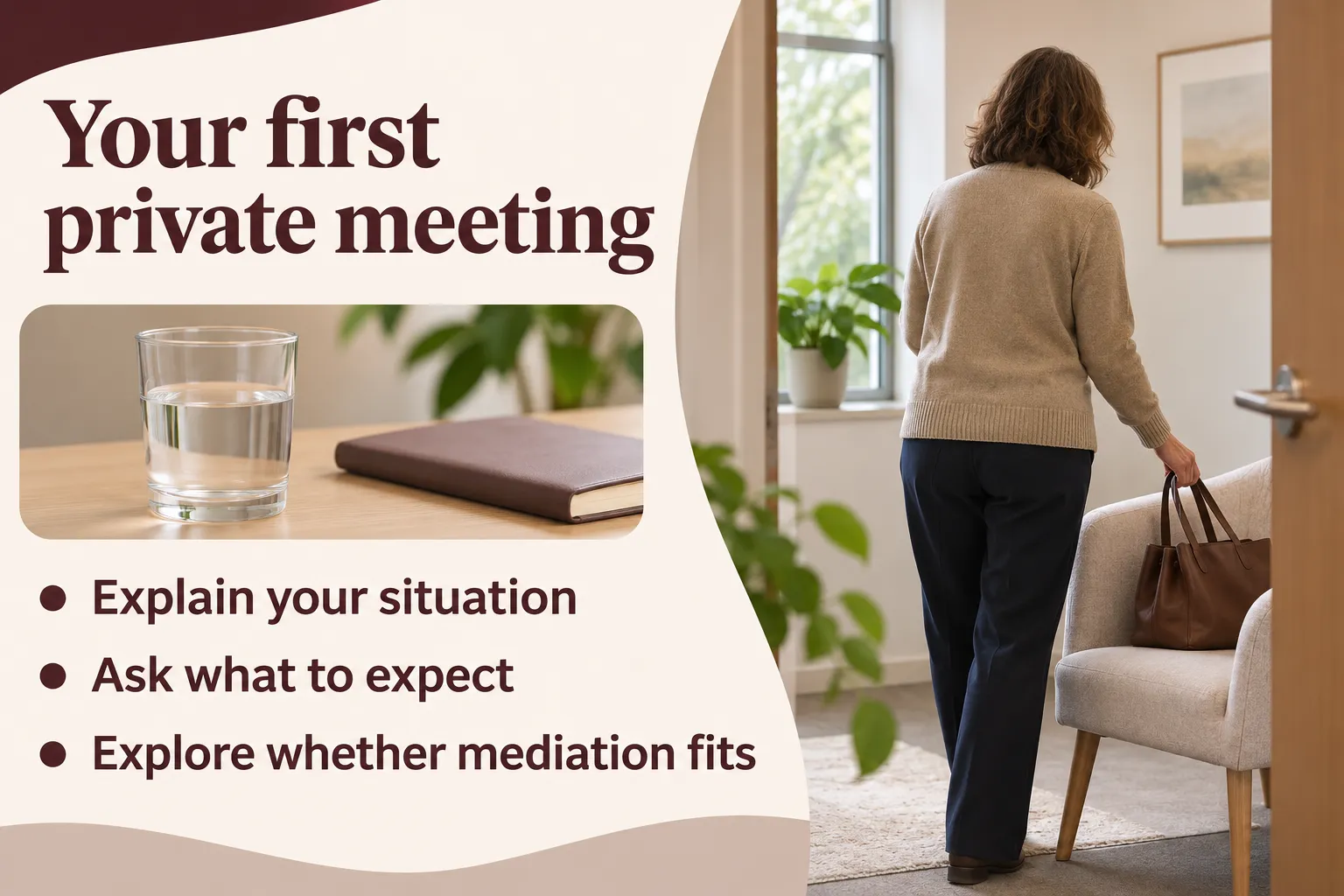
If your call leads to a first meeting, it will generally be about understanding your situation and whether mediation fits. It is not a negotiation, and you do not have to convince anyone of anything.
Try to answer honestly, even where the answer feels uncomfortable or does not reflect well on you. A first meeting exists partly to establish whether mediation is safe and workable, and that assessment is only as useful as the information behind it. If there is something you would prefer to say only to the mediator and not in front of the other person, tell them so.
When the meeting ends, you should have a clearer idea of what could come next, and you should not feel obliged to agree on the spot. You might go on to joint sessions, take advice, or decide that a different route suits you better. Before you leave, check how things proceed should the other person not reply.
There may be a gap between your call and anything else happening. How you use that time can make a real difference to how the first conversation goes.
Where possible, keep children's routines as they are, and avoid announcing large changes that have not been discussed. A sudden move can make a later conversation much harder, unless it is needed for someone's safety.
Note the dates and practical details you may need, such as the current pattern of care or the bills that fall due. Keep this factual and store it somewhere that other people cannot read it.
Talk to someone you trust, and consider professional support if the strain is heavy. Feeling calmer is not a requirement for mediation, but a little support can make hard conversations easier to get through.
Some people ring having already tried mediation, or having tried to agree things themselves, without success. That history is useful to mention, and it does not rule anything out.
It helps to explain what got in the way. Perhaps one person felt rushed, the timing was too soon after the separation, or the topic was money and the figures were not yet available. Some of these obstacles can be dealt with through a different format or a better order of discussion. Others may suggest that mediation is not the right step at the moment, and that is worth knowing as well.
Circumstances also change. A person who could not face the other party a year ago may feel differently now, and a new school or a new job may have given both of you a practical reason to talk. Equally, you do not have to try again simply because someone else thinks you should. Tell us what happened, and ask what would be different this time.
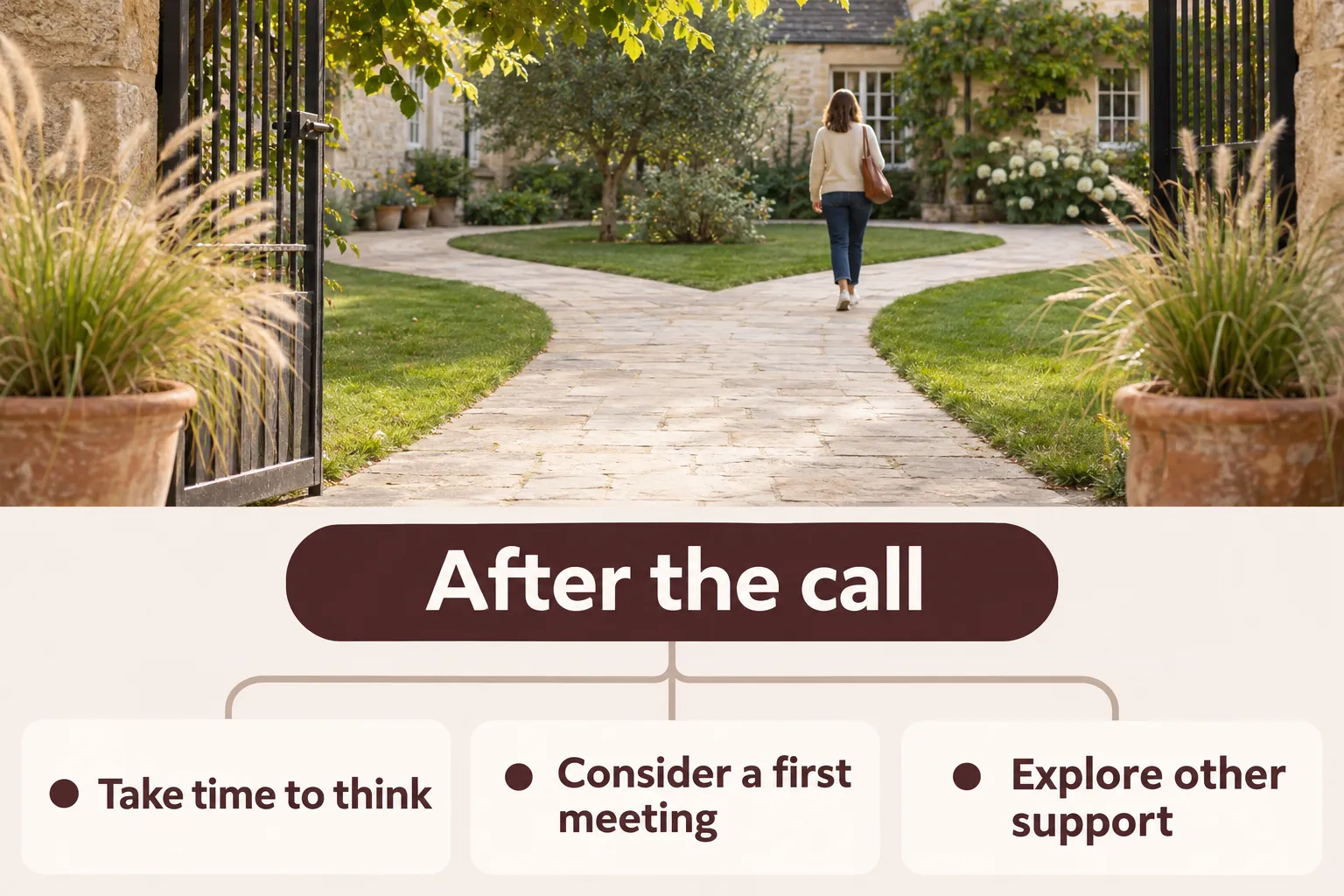
An enquiry may lead to one of several outcomes, and every one of them is an acceptable result. A good call leaves you clearer about your next move, even if that move has nothing to do with us.
Nothing has to be decided while you are on the telephone. It is perfectly normal to say, "Thank you, I'd like to think about that and call back."
You agree a date and format for a first meeting, understanding what it is for and what it costs. The other person may be contacted separately if that has been discussed and is appropriate.
You have what you need for now, and you want to think it over, talk to someone you trust or take legal advice. There is no pressure to decide during the call, and no obligation to ring back.
You realise you first need a document, a figure or some independent advice. Sorting that out may make a later conversation more productive, and it can often be done without any rush.
It may become clear that mediation is not suitable at present because of safety, urgency or the nature of the issue. A different kind of help may be needed, and we would rather you heard that early.
There is not. The only way to enquire is by telephone on 0330 010 0028. This site has no booking calendar, enquiry form or payment page, so nothing you do here will reserve an appointment for you.
No. You may ring for your own information without telling anyone. Your call cannot commit another person, though, and any joint mediation would need their agreement to take part.
Ask about this directly before you share any details. If you are concerned, make it clear at the start of the conversation that you are not yet asking for anyone to be approached.
They can ask general questions about how the service works. Any decisions about taking part must be your own, and you may be asked to speak for yourself before anything is arranged.
We cannot give a general answer on this website. Ask on the call, and explain any date you are working towards. If a deadline is pressing, take legal advice at the same time rather than waiting.
Let us know as soon as you can. Ask at the time of arranging what the position is on changing or cancelling an appointment, and whether any charge would apply. Your statutory rights are not affected.
Find a private moment, bring your one-page note if you have made one, and begin with whichever sentence feels most natural. You can stop whenever you need to.