Teeth Whitening
Teeth Whitening is one of the most widely discussed cosmetic dental treatments, and also one of the most misunderstood. People arrive at the subject from very different starting points. Some have noticed their teeth looking duller in photographs. Others have lived with staining for years and only recently started to wonder whether anything can be done about it. A good number simply want to know whether whitening is safe, whether it will hurt, and whether it works on teeth like theirs.
This page sets out to answer those questions honestly. Teeth Whitening is a cosmetic treatment that aims to lighten the appearance of natural teeth. It does not repair damage, it does not treat decay, and it does not work in the same way on every set of teeth. Understanding those boundaries is the most useful thing anyone can do before treatment, because it turns a vague hope into a realistic expectation.
What follows is a plain explanation of how Teeth discolouration develops, how whitening treatment addresses it, why results differ from person to person, and what sensible aftercare looks like. There is no pressure here and nothing to sign up for-only the information a reasonable person would want before considering any cosmetic dental treatment.
What Is Teeth Whitening?
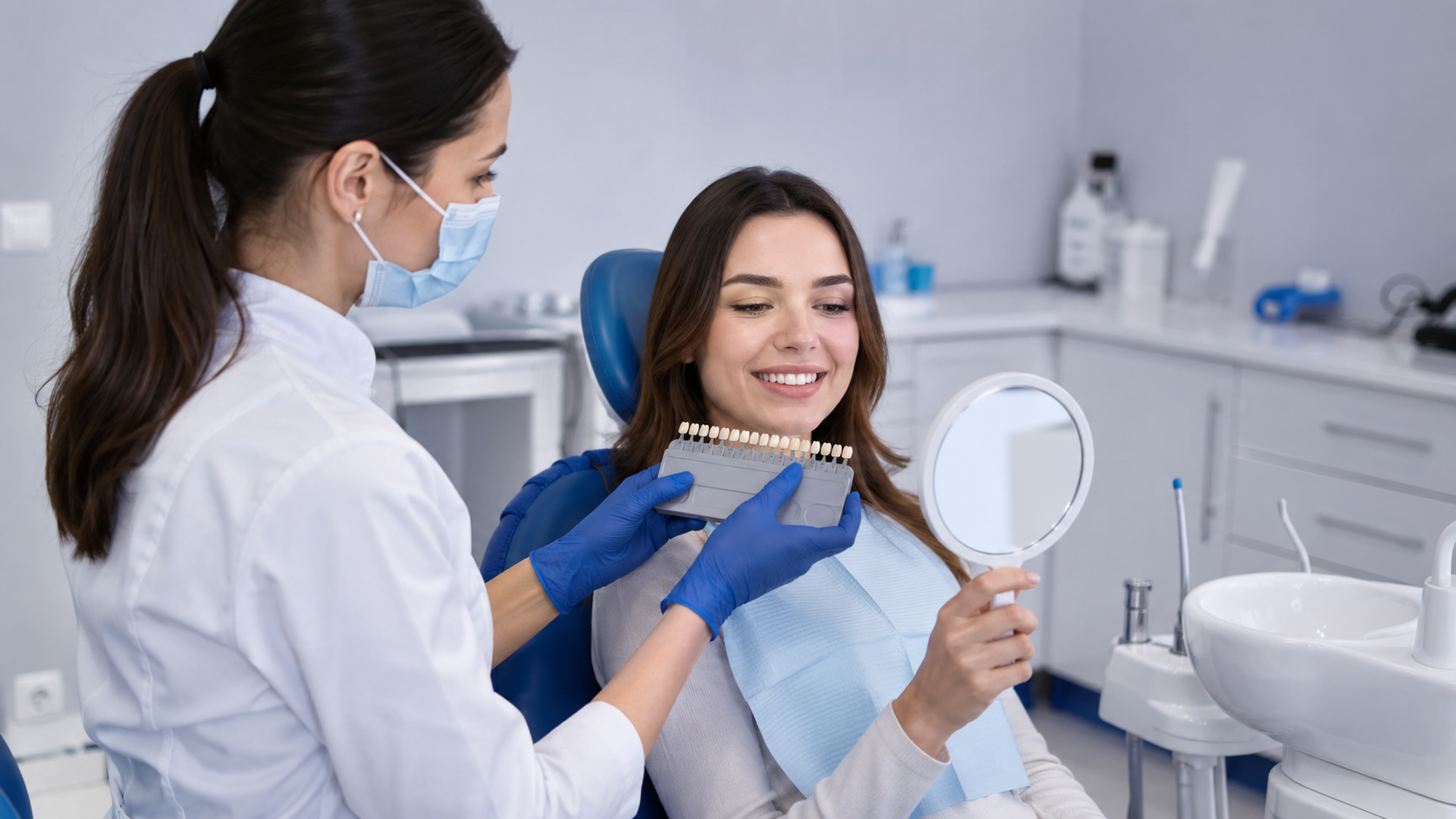
Teeth Whitening, sometimes called Teeth whitening, is a cosmetic dental treatment that lightens the colour of natural teeth. It works on the Teeth structure itself rather than removing material from the surface, which is what separates it from a routine clean or a polish. A hygiene appointment can lift surface deposits; whitening treatment works on the shade of the Teeth beneath them.
Natural teeth are not naturally brilliant white. Every person has an underlying Teeth shade determined largely by the thickness and translucency of the enamel and the colour of the dentine sitting beneath it. Some people begin life with warmer, more yellow-toned teeth and some with cooler, greyer tones. Neither is a fault. It simply means the starting point differs, and so does the range of change that whitening can reasonably achieve.
Over time, that starting shade tends to shift. Enamel gradually thins with age, allowing more of the darker dentine underneath to show through. Pigments from food, drink and tobacco accumulate. Old dental work may no longer match the surrounding teeth. The overall effect is a smile that looks duller or more yellow than it once did, even when oral hygiene has been perfectly good.
Why results vary between individuals
Two people can follow a similar whitening process and finish with noticeably different outcomes. That is normal, and it is worth understanding why. The cause of the discolouration matters a great deal-staining that sits on and near the surface generally responds more readily than discolouration originating from within the Teeth. The starting shade matters too, as does the condition of the enamel, the presence of any visible dental work, and how a particular person's teeth respond to the treatment.
This is why nobody can responsibly promise a specific end shade in advance. What a dental professional can do is assess the teeth, explain what kind of change is plausible in that individual case, and be honest where expectations may need adjusting.
Why realistic expectations matter
The people most satisfied with Teeth Whitening are usually those who understood beforehand what it could and could not do. Whitening aims to lighten natural teeth to a shade that looks fresher and more even. It is not a route to a uniform, artificial-looking white, and it does not change the shape, alignment or condition of teeth. Approached with that understanding, the result tends to feel like a natural improvement rather than a disappointment measured against something unattainable.
Why Teeth Become Discoloured
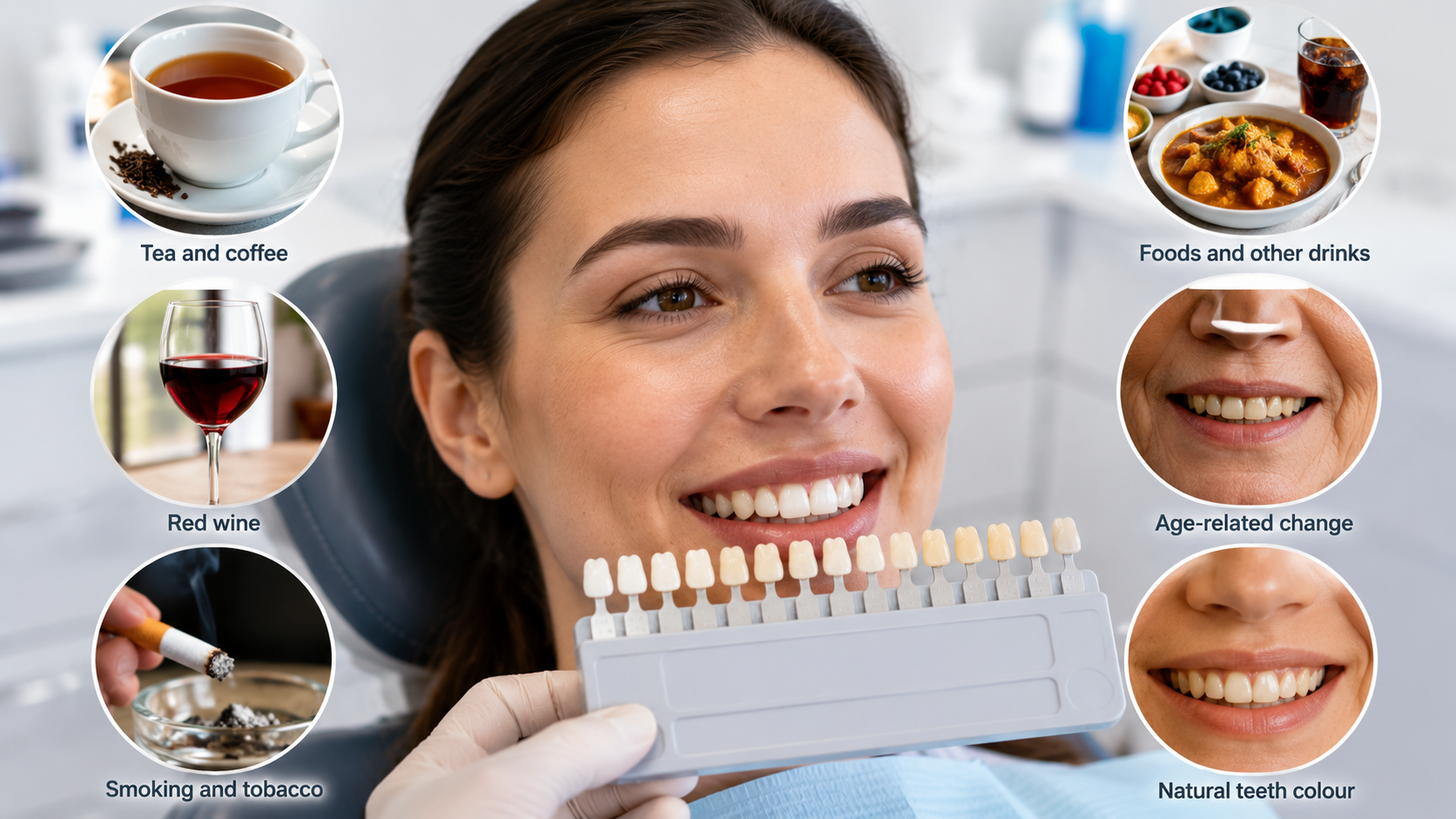
Teeth discolouration builds gradually, which is exactly why it so often goes unnoticed until a photograph or a comparison makes it obvious. Several everyday factors contribute, and most people are affected by more than one at the same time.
Tea and coffee
Both contain pigments that cling readily to the Teeth surface. Regular daily drinking, particularly when the liquid is sipped slowly over long periods, gives those pigments extended contact time and allows staining to build steadily.
Red wine
Deeply pigmented and mildly acidic, red wine is a well-recognised contributor to Teeth staining. The combination of strong colour and acidity means it tends to leave a more noticeable mark than lighter drinks.
Smoking and tobacco
Tobacco use is associated with some of the most persistent surface staining seen on teeth. The discolouration often develops an unmistakable yellow or brown character and can be resistant to ordinary brushing.
Foods and other drinks
Dark berries, rich sauces, curry spices, cola and strongly coloured fruit juices all leave pigment behind. No single item is responsible; it is the cumulative pattern over months and years that shows.
Age-related change
Enamel thins naturally over a lifetime while the dentine beneath it tends to darken. Together these changes can make teeth appear more yellow with age, independently of diet or hygiene habits.
Natural Teeth colour
Some people simply have a warmer natural shade from the outset. This is inherited rather than acquired and forms part of the baseline any whitening assessment needs to take into account.
Surface staining and deeper discolouration
It helps to distinguish between the two broad categories. Surface-or extrinsic-staining sits on and just within the outer layer of the Teeth and is generally the type most associated with food, drink and tobacco. It is usually the more responsive of the two.
Deeper or intrinsic discolouration comes from within the Teeth structure itself. It can relate to changes inside the Teeth, previous dental history, or the natural characteristics of the Teeth. Discolouration of this kind behaves differently and does not always respond to whitening in the same way or to the same degree.
Because the two can look similar to an untrained eye, it is not always possible to judge from a mirror which type you are dealing with. That is one of the practical reasons an assessment before treatment is worthwhile: it clarifies what is actually causing the appearance you want to change.
How Teeth Whitening Works
The principle behind Teeth Whitening is straightforward, even if the detail is not. A whitening agent is applied to the teeth and, over a controlled period of contact, acts on the pigmented compounds held within the Teeth structure. As those compounds are broken down, the Teeth reflects light differently and appears lighter in shade.
The important word in that description is controlled. The strength of the agent, the length of time it remains in contact with the teeth, and the way the surrounding soft tissues are protected all influence both the result and the comfort of the experience. This is the core reason professional assessment and supervision matter, and why whitening is not simply a question of applying more product for longer.
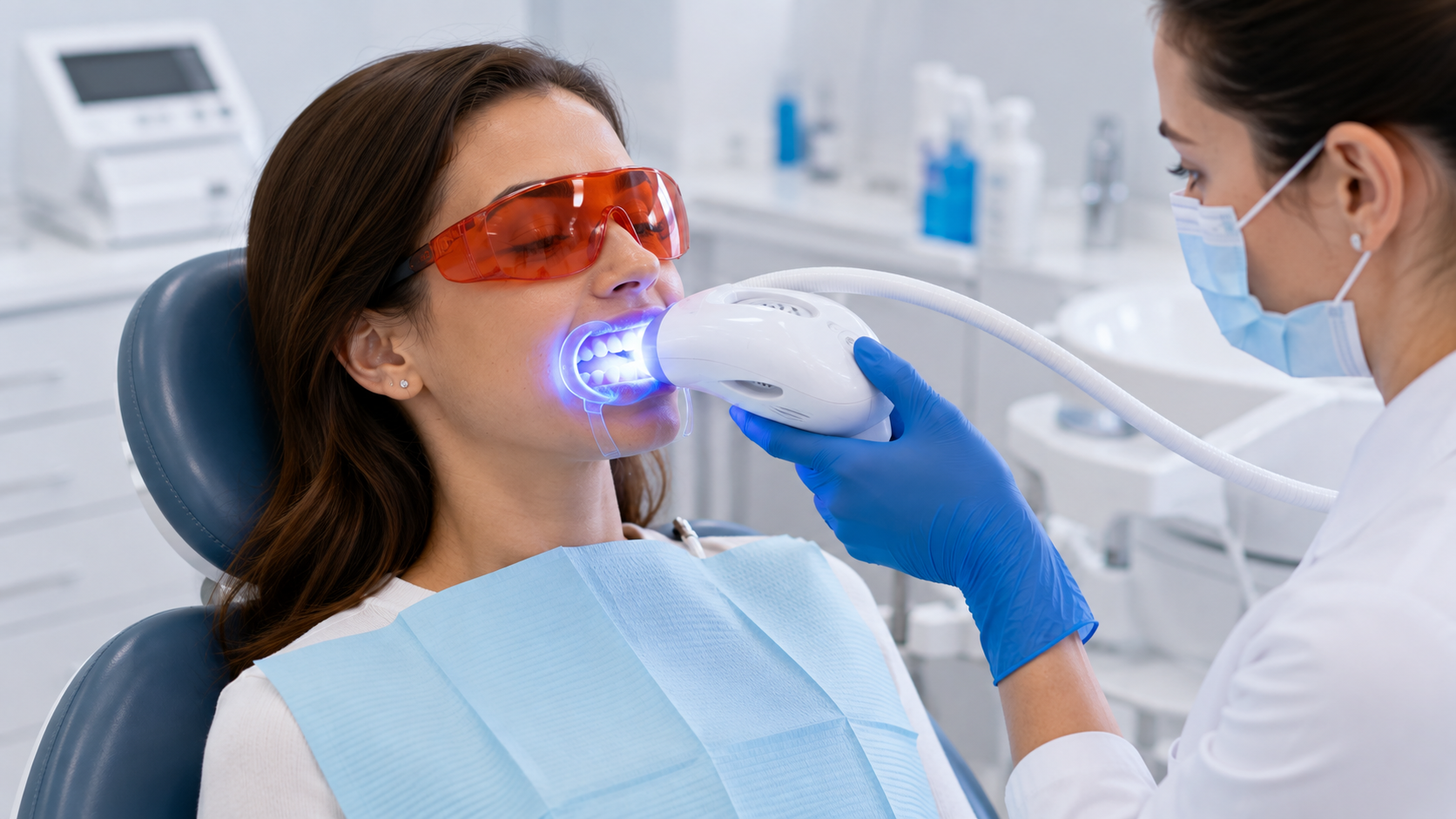
Why professional assessment matters
Before any whitening agent is used, it is sensible to know what condition the teeth and gums are in. Whitening is a cosmetic procedure applied to a biological structure, and that structure needs to be healthy for the treatment to be appropriate. Untreated decay, gum inflammation, exposed root surfaces or damaged enamel all change the picture, and none of them are reliably visible to the person concerned.
An assessment also establishes what kind of discolouration is present and therefore what sort of change is plausible. It gives a realistic frame of reference before anything begins, rather than after.
Why people respond differently
Teeth structure is not uniform between individuals. Enamel varies in thickness and translucency, dentine varies in colour, and the nature of accumulated staining varies enormously. These differences mean the same approach can produce a marked change in one person and a subtler change in another. Neither outcome indicates that something has gone wrong-it reflects the material the treatment is working with.
Natural teeth and dental restorations
Whitening agents act on natural Teeth structure. Materials used in fillings, crowns, veneers and bridges are manufactured and do not respond in the same way. This distinction has real consequences for anyone with visible dental work, and it is covered in more detail further down this page.
Professional Teeth Whitening
Professional Teeth Whitening is best understood as a short course of care rather than a single event. The treatment itself sits in the middle of a sequence that begins with assessment and ends with aftercare, and each stage exists for a reason.
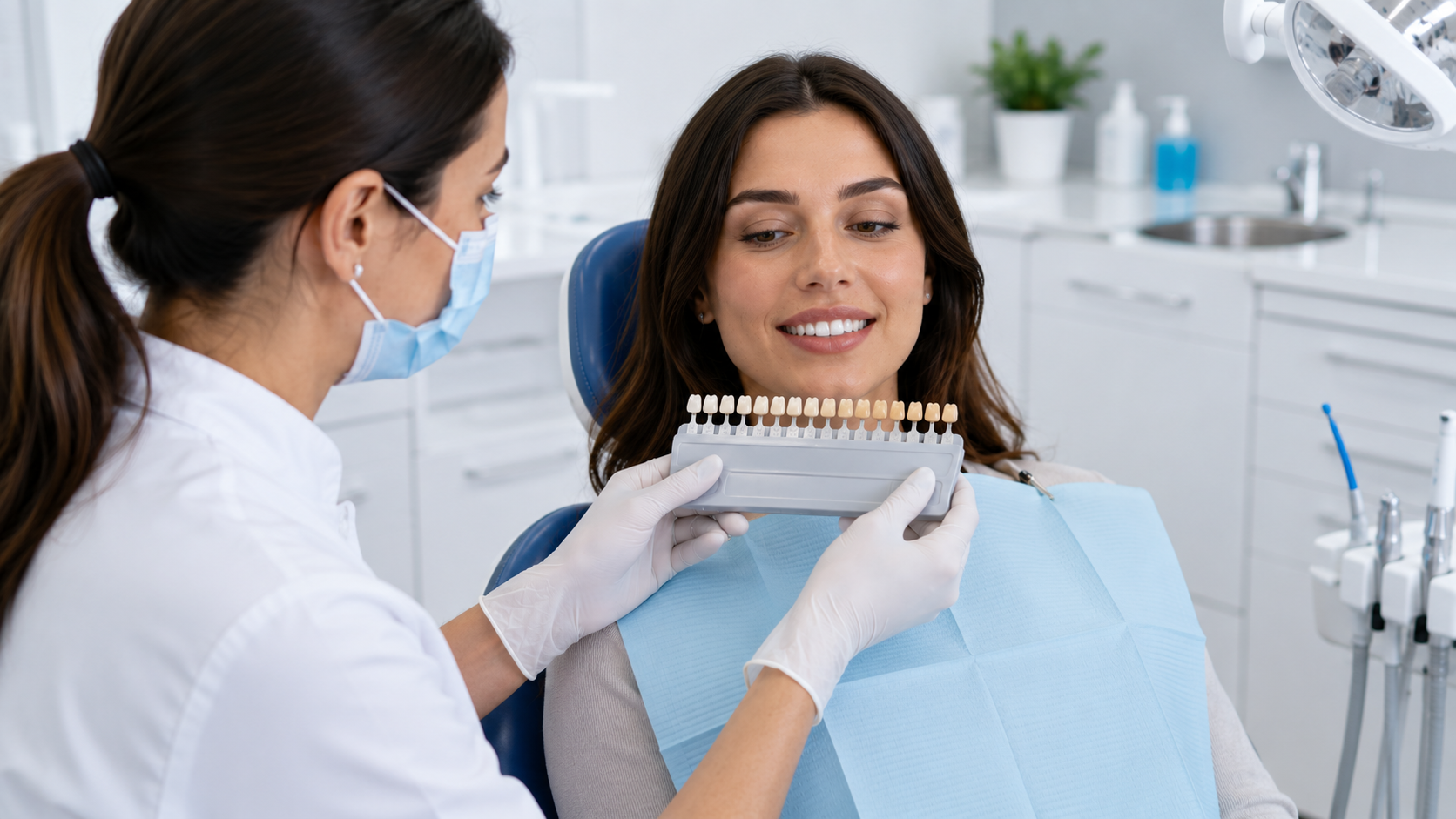
Assessment and suitability
The process starts by establishing whether whitening is appropriate at all. That means looking at the teeth and gums, identifying any existing dental concerns, noting restorations, and asking about previous sensitivity or earlier whitening experiences. Where a dental problem is identified, it is usually more sensible to address that first-cosmetic treatment sits on top of dental health rather than in place of it.
Discussing what you want to achieve
A useful conversation at this stage covers what has prompted the interest in whitening, what kind of change would feel worthwhile, and whether that change is realistic given the starting point. Being specific here is more helpful than being polite. If a particular Teeth bothers you, or a photograph prompted the thought, saying so gives the assessment something concrete to work with.
Planning the treatment
Treatment planning takes account of the individual picture-the type of staining, the condition of the teeth, any history of sensitivity, and the presence of visible dental work. The approach and its pacing are adjusted accordingly. This is where whitening stops being a generic procedure and becomes something tailored to one person's mouth.
Treatment, monitoring and review
During treatment, comfort is monitored rather than assumed. Afterwards, the result is reviewed against what was discussed at the outset, and aftercare guidance is provided so the appearance can be maintained sensibly. The review matters-it is the point at which expectations and outcome are compared honestly.
The Teeth Whitening Consultation
A consultation before Teeth Whitening is not a formality. It is the stage that determines whether treatment is appropriate, what form it should take, and what a reasonable outcome looks like for one particular person. Several things are typically considered.
- Teeth and gum condition — healthy tissues are the foundation for any cosmetic treatment, and problems are better identified before whitening than after.
- Existing sensitivity — teeth that already react to hot, cold or sweet stimuli may need a more measured approach.
- The type and cause of staining — surface staining and deeper discolouration behave differently and should be distinguished early.
- Cracks, decay or other dental concerns — these may need attention in their own right before cosmetic treatment is considered.
- Fillings, crowns, veneers and other restorations — their position and visibility affect how even the final appearance will look.
- Previous whitening experience — how your teeth responded before is genuinely useful information.
- Your desired outcome — a clear picture of what you are hoping for allows an honest response about whether it is achievable.
Teeth Whitening is a cosmetic treatment. It improves the appearance of natural teeth but does not treat dental disease and does not replace the general dental care that keeps a mouth healthy. Where there are signs of a dental problem, addressing that comes first.
What Happens During Teeth Whitening?
The sequence below describes the general shape of professional whitening treatment. The detail varies according to the individual assessment and the approach agreed beforehand.
- Suitability is confirmed
The teeth and gums are checked, existing dental work is noted, and any concerns raised at consultation are revisited before treatment begins.
- The intended result is discussed
What you are hoping for is confirmed, along with a realistic view of what the treatment is likely to achieve for your teeth specifically.
- The teeth are prepared
The surfaces are made ready so the whitening agent makes even contact across the teeth being treated.
- Surrounding areas are protected
The gums and soft tissues are shielded so that the treatment stays where it is intended to act. This is a standard part of a careful whitening procedure.
- The whitening treatment is applied
The agent is applied according to the plan agreed for your teeth, with attention to placement and coverage.
- Progress and comfort are monitored
You are asked how you are finding the treatment as it proceeds. Any discomfort should be mentioned at the time rather than tolerated quietly.
- Treatment is completed and reviewed
The result is looked at together and compared with the expectations discussed at the beginning.
- Aftercare guidance is provided
Practical advice follows on how to look after your teeth in the period afterwards and how to keep the appearance for as long as reasonably possible.
Teeth Whitening for Different Types of Staining
People come to Teeth Whitening with different histories, and the reason behind the discolouration shapes what treatment can offer. The groups below are among the most common, though few people fall neatly into only one.
Tea and coffee drinkers
Frequent tea and coffee consumption is one of the most common contributors to gradual Teeth staining. The pigments in both drinks are readily deposited on the Teeth surface, and the habit of sipping across a working day extends the contact time considerably. Staining of this kind is often the sort that responds reasonably well, though the pattern usually returns over time if the same habits continue at the same intensity. Maintenance, rather than a one-off change, tends to be the realistic frame for regular drinkers.
Smokers
Tobacco use is associated with noticeable and often persistent staining that ordinary brushing does not remove. How much improvement whitening can offer depends on the extent of the discolouration and the condition of the teeth beneath it. Continuing to smoke after treatment will influence how long any improvement in appearance lasts. An honest assessment beforehand is particularly valuable here, so that the expected outcome is understood clearly rather than assumed.
Younger adults
Many younger adults enquire about Teeth Whitening because of mild lifestyle staining rather than any dental problem-the cumulative effect of coffee, wine or coloured drinks over a few years. Concerns and expectations vary widely within this group, and assumptions are unhelpful. The same principles apply as for anyone else: the teeth and gums should be healthy, the cause of the discolouration should be understood, and the expected result should be discussed rather than presumed.
People concerned about sensitive teeth
Sensitivity is one of the most frequent reasons people hesitate. It is a reasonable concern and deserves a direct answer rather than reassurance for its own sake. Some people experience increased sensitivity during or after whitening; others notice very little. Existing sensitivity, exposed root surfaces, worn enamel and gum recession can all influence how comfortable the process feels.
If you have experienced sensitivity before-with hot drinks, cold air, sweet foods, or during previous whitening-that history should be raised at the assessment. It genuinely changes how treatment is planned. In some situations a more cautious approach is appropriate, and in others whitening may not be the right course at that time. Teeth Whitening is not suitable for every dental situation, and it should not be presented as though it were.
Teeth Whitening and Sensitive Teeth
Sensitivity is worth its own explanation, because it is both common and commonly misunderstood.
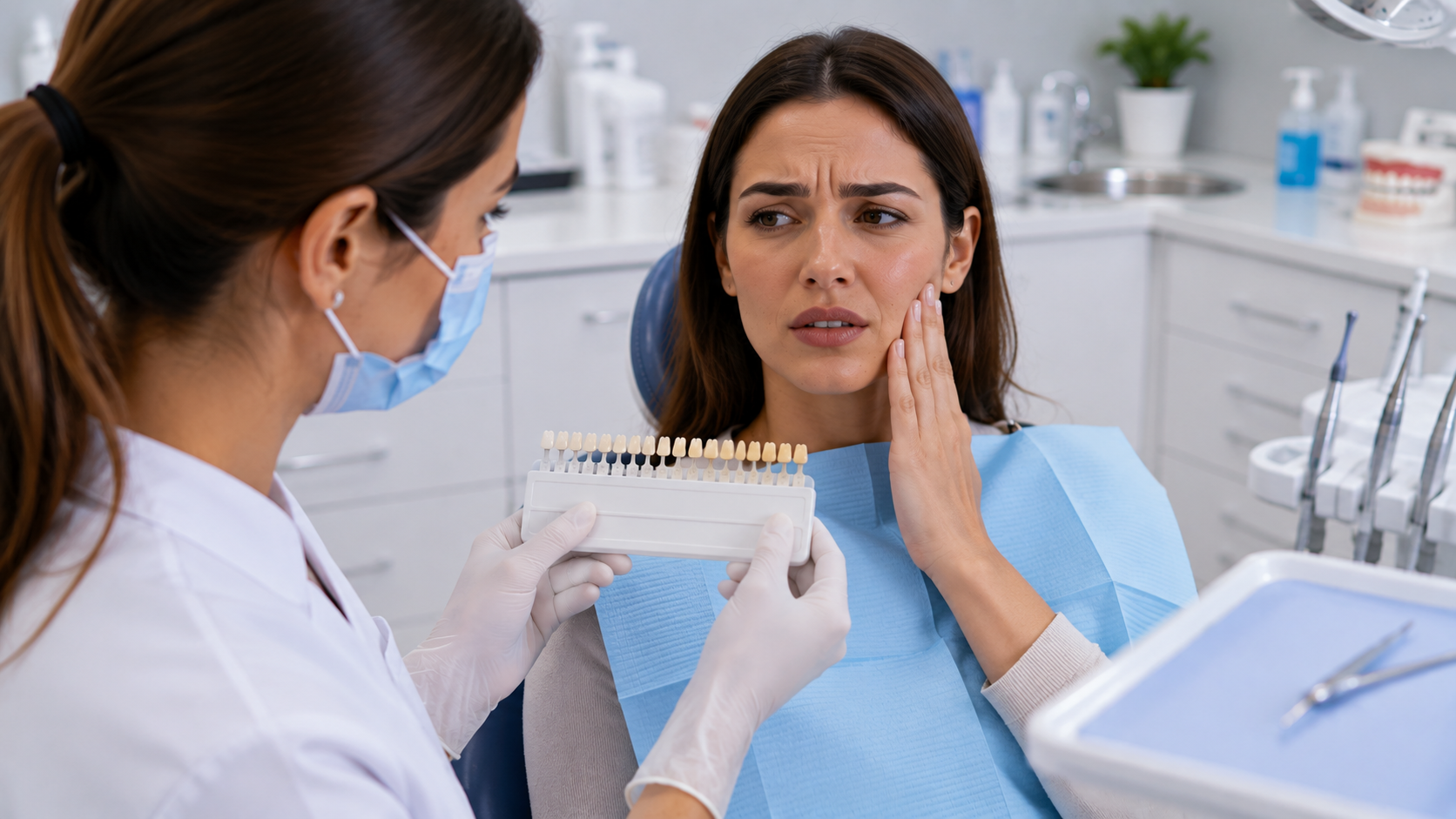
What sensitivity can feel like
Most people describe it as a short, sharp sensation in one or more teeth, often prompted by something cold, hot or sweet. It usually fades quickly once the trigger is removed. Some people notice a brief twinge during whitening treatment itself, and some notice teeth feeling more reactive than usual for a period afterwards.
Why whitening may temporarily increase sensitivity
Whitening involves an active agent in sustained contact with the Teeth. In some people this makes the teeth temporarily more responsive to stimuli. Where it happens, it is generally a passing effect rather than a lasting change, though how it is experienced varies from person to person.
Factors that can influence sensitivity
- Sensitivity already present before treatment
- Areas of gum recession or exposed root surface
- Worn, thin or damaged enamel
- Existing dental conditions that have not yet been assessed
- How your teeth have responded to previous whitening
Why your history matters
Raising previous sensitivity before treatment is the single most useful thing a sensitive patient can do. It allows the approach to be planned with that in mind and the pacing adjusted where appropriate, rather than discovering the issue partway through.
Sensitivity that is severe, persistent, or unexplained is not something to work around at home. It should be assessed by a dental professional, because it may indicate a dental issue that needs attention in its own right-quite separately from any cosmetic treatment.
Teeth Whitening and Existing Dental Work
This is one of the most important limitations to understand, and one of the most frequently overlooked.
Teeth Whitening changes the colour of natural Teeth structure. It does not change the colour of manufactured dental materials in the same way. Fillings, crowns, veneers, bridges and other restorations were made to match the shade of the surrounding teeth at the time they were placed. If the natural teeth around them lighten, those restorations stay as they are-and a match that previously looked seamless may begin to stand out.
Restorations this commonly affects
- Fillings — particularly Teeth-coloured fillings placed in visible positions at the front of the mouth
- Crowns — which keep their manufactured shade regardless of any change to neighbouring teeth
- Veneers — made to a chosen shade that whitening will not alter
- Bridges — where the visible components behave like other restorative materials
- Other visible dental work — anything within the smile line that was shade-matched when placed
None of this means whitening is unsuitable for people with dental work. It means the position and visibility of that work should be discussed openly beforehand, so that the likely appearance afterwards is understood rather than discovered. Where restorations are prominent in the smile, this conversation is essential.
Decisions about replacing or altering existing dental work depend on a clinical examination of your specific circumstances and cannot sensibly be made from general information on a web page.
Who May Be Suitable for Teeth Whitening?
Suitability is individual, and it would be misleading to suggest that Teeth Whitening is appropriate for everyone who wants it. Several factors contribute to the assessment.
Oral health
Generally healthy teeth and gums provide the foundation. Where dental problems are present, they usually take priority over cosmetic treatment.
Teeth and gum condition
The state of the enamel, the gum margins and any areas of recession all influence whether whitening is appropriate and how it should be approached.
Existing sensitivity
A history of sensitivity does not automatically rule whitening out, but it does need to be discussed and factored into planning.
Type of staining
Surface staining and deeper discolouration respond differently, which affects both suitability and the outcome that can reasonably be expected.
Dental restorations
Visible fillings, crowns or veneers shape what the final appearance will look like and should be reviewed before treatment.
Expectations
Where hopes are considerably beyond what the treatment can achieve, that gap is better identified early than discovered afterwards.
If you are uncertain about your oral health or whether whitening is appropriate for you, a professional assessment is the sensible way to find out. General information can explain the treatment; only an examination can determine whether it suits your circumstances.
When Teeth Whitening May Not Be Appropriate
Responsible information includes the situations in which whitening should be delayed or reconsidered. The following circumstances generally warrant attention before any cosmetic treatment.
- Untreated dental problems — decay or other active issues need addressing on their own terms first.
- Significant gum problems — inflamed, bleeding or receding gums change the picture and should be assessed.
- Unexplained Teeth pain — pain is a signal worth investigating rather than covering over with cosmetic treatment.
- Severe or persistent sensitivity — this warrants professional assessment before whitening is considered.
- Damaged teeth — cracks, chips or wear may need attention before any cosmetic work.
- Certain types of internal discolouration — some deeper discolouration does not respond to whitening in the way people hope.
- Where the desired result is not realistically achievable — an honest conversation at this point is more valuable than proceeding regardless.
Nothing on this page can tell you which of these applies to you. Symptoms such as pain, bleeding gums, unusual sensitivity or visible damage should be assessed by an appropriate dental professional, who can examine your teeth and advise properly.
What Results Can You Expect?
Realistic expectations are the difference between satisfaction and disappointment, so it is worth being direct about what Teeth Whitening does and does not deliver.
- Results vary from person to person, and that variation is normal rather than a sign that something has gone wrong.
- Everyone starts from a different natural Teeth colour, and the starting shade shapes the possible range of change.
- The type of staining influences the outcome — surface staining and deeper discolouration behave differently.
- Some stains respond more readily than others, even within the same mouth.
- Existing restorations will not change colour alongside the natural teeth around them.
- Lifestyle habits affect how long a brighter appearance is maintained after treatment.
- Whitening is not intended to produce an identical shade for every person who has it.
For those reasons, no responsible source will promise a specific number of shades, a specific final appearance, or a specific length of time that a result will last. What can be offered is an informed view of what is plausible in your particular case, based on an examination of your teeth.
Safety and Professional Standards
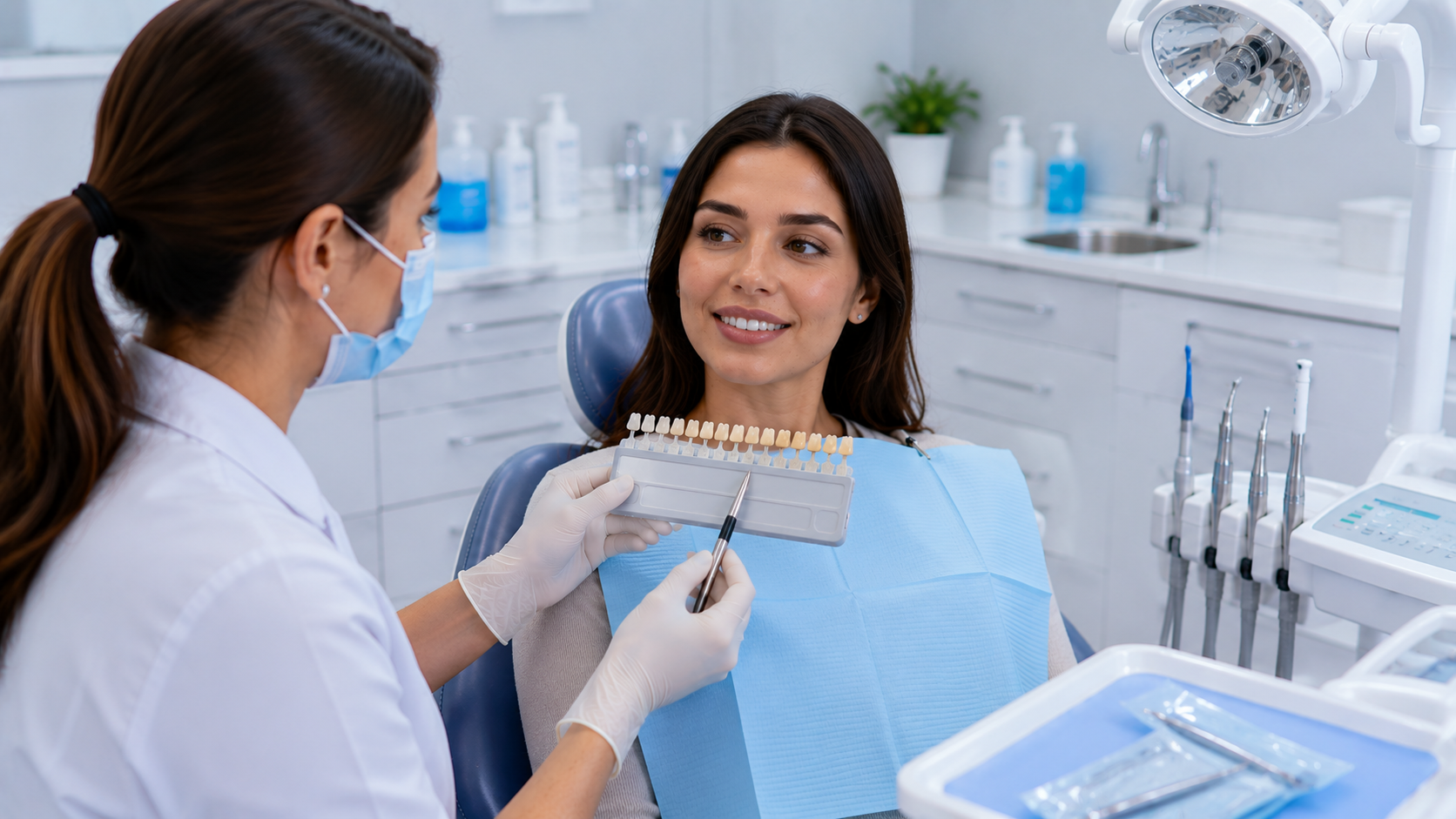
Teeth Whitening is a treatment applied to living tissue, and it should be treated with the same care as any other dental procedure. That principle underpins every stage of a properly run whitening process.
Careful practice means assessing before treating, protecting the gums and soft tissues during treatment, using an approach matched to the individual rather than a single template, monitoring comfort as the treatment proceeds, and reviewing the outcome honestly afterwards. It also means recognising when whitening is not the appropriate course and saying so.
Equally important is the boundary between cosmetic and clinical care. Whitening changes appearance; it does not treat disease. Where an examination identifies decay, gum problems or damage, those findings take priority. Cosmetic treatment that proceeds over an untreated dental problem serves nobody well.
Anyone considering whitening is entitled to understand what the treatment involves, what alternatives exist, what the likely outcome is for their teeth, and what may happen if the result falls short of what they hoped. Those questions deserve straight answers before treatment rather than after.
Maintaining Your Teeth Whitening Results
The appearance achieved through whitening is not permanent, because the habits that caused the original discolouration usually continue. Maintenance is less about restriction and more about awareness.
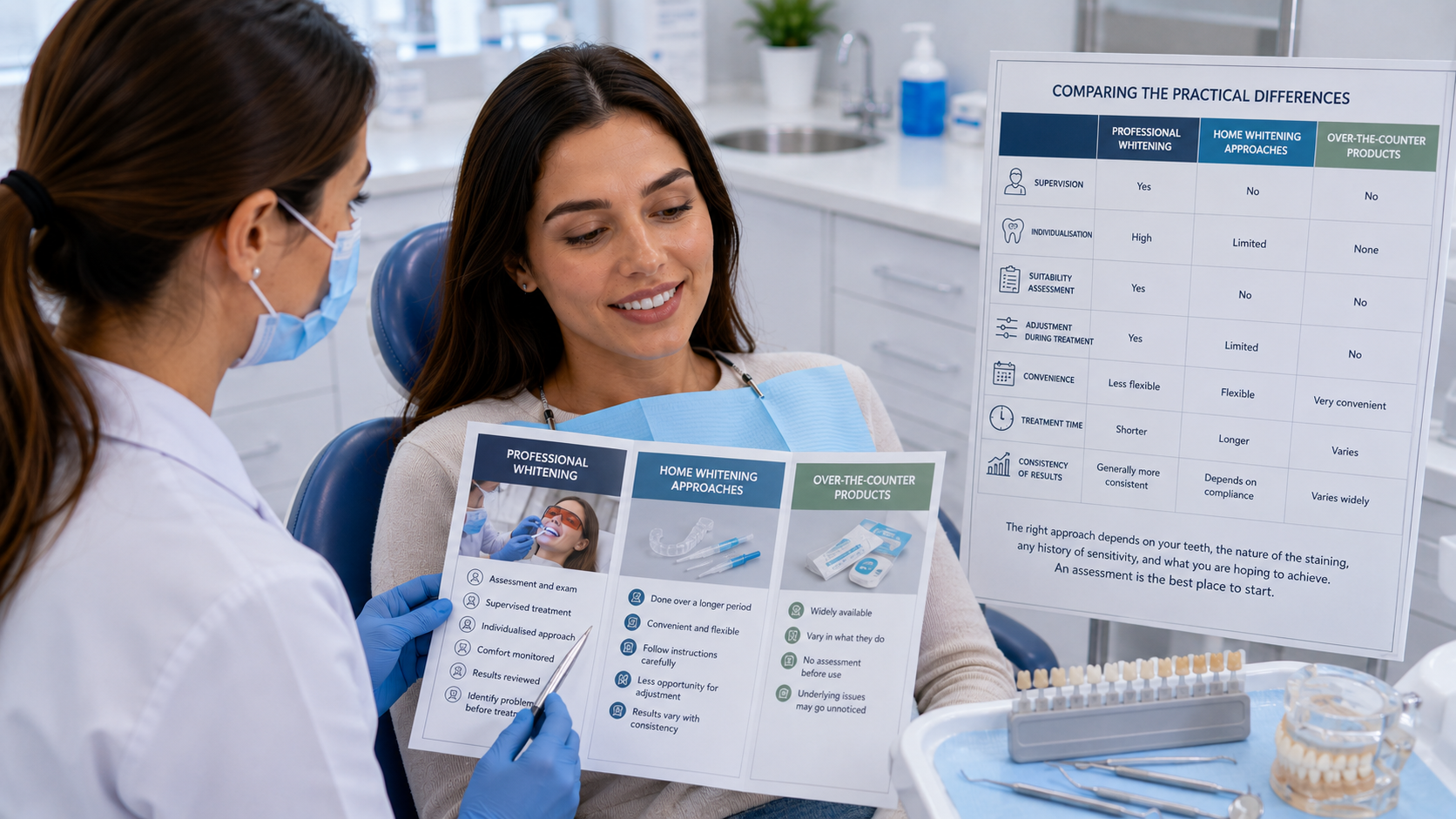
- Keep oral hygiene consistent. Regular, thorough brushing remains the foundation of how teeth look as well as how healthy they are.
- Clean between the teeth. Interdental cleaning reaches surfaces a brush cannot, and those surfaces contribute to the overall appearance.
- Be aware of strongly coloured food and drink. Knowing which items contribute to staining allows sensible moderation rather than complete avoidance.
- Rinse with water after strongly coloured drinks. A simple rinse reduces how long pigments stay in contact with the teeth.
- Avoid prolonged exposure. Sipping a coffee across two hours gives pigment far more contact time than drinking it in ten minutes.
- Follow the aftercare guidance you were given. Advice provided for your specific treatment takes precedence over general information.
- Keep up with dental check-ups. Routine care supports both the health and the appearance of your teeth over time.
None of this requires a dramatic change in how you live. Small, consistent habits tend to make more difference over months than short bursts of strict effort.
Lifestyle and Teeth Whitening
Everyday habits have a steady, cumulative influence on how teeth look after whitening. Understanding that influence is more useful than following a restrictive list.
Tea and coffee are the most common contributors simply because they are consumed so regularly. It is rarely necessary to give them up. Reducing how long each drink lingers, or following one with a glass of water, addresses much of the issue without changing your routine.
Red wine combines pigment with acidity and tends to leave a more noticeable trace than lighter drinks. Occasional consumption alongside good oral hygiene is a very different picture from frequent consumption without it.
Smoking has a marked effect on Teeth appearance and on how long a whitening result holds. Anyone considering whitening while continuing to smoke should expect that to shape both the outcome and its longevity.
Highly pigmented foods such as dark berries, rich sauces and curry spices contribute in smaller measure. They are worth being aware of rather than eliminating — the aim is a sustainable balance, not an unnecessarily narrow diet.
Oral hygiene and regular dental care underpin everything else. Consistent home care and routine professional check-ups do more for the long-term appearance of teeth than any single dietary adjustment.
Professional Teeth Whitening and Home Whitening
People often ask how professional treatment compares with whitening carried out at home. Both approaches exist, and the honest answer is that they differ in several respects rather than one being universally better.
Professional whitening
Carried out following an assessment, with the teeth and gums checked first and the approach adapted to the individual. Comfort is monitored during treatment and the result reviewed afterwards. The main advantages are supervision, individualisation and the opportunity to identify problems before treatment begins.
Home whitening approaches
Typically carried out by the person themselves over a longer period. Convenience and flexibility are the appeal. Consistency depends heavily on how carefully the process is followed, and there is less opportunity for the approach to be adjusted in response to how the teeth are actually reacting.
Over-the-counter products
Widely available and easy to obtain. They vary considerably in what they set out to do, and they are not preceded by any assessment of your teeth and gums. Because no examination takes place, an underlying dental issue can go unnoticed.
Comparing the practical differences
The most meaningful distinctions concern supervision, individualisation and suitability. Professional treatment includes an examination beforehand and adjustment during; approaches carried out independently rely on the individual following instructions without that oversight. Convenience and treatment time differ too, as does the consistency of how the treatment is applied.
What no honest comparison can claim is that one method suits everyone. The right approach depends on the condition of your teeth, the nature of the staining, any history of sensitivity, and what you are hoping to achieve — which is precisely why an assessment is a useful starting point regardless of which route eventually makes sense.
Why Individual Treatment Planning Matters
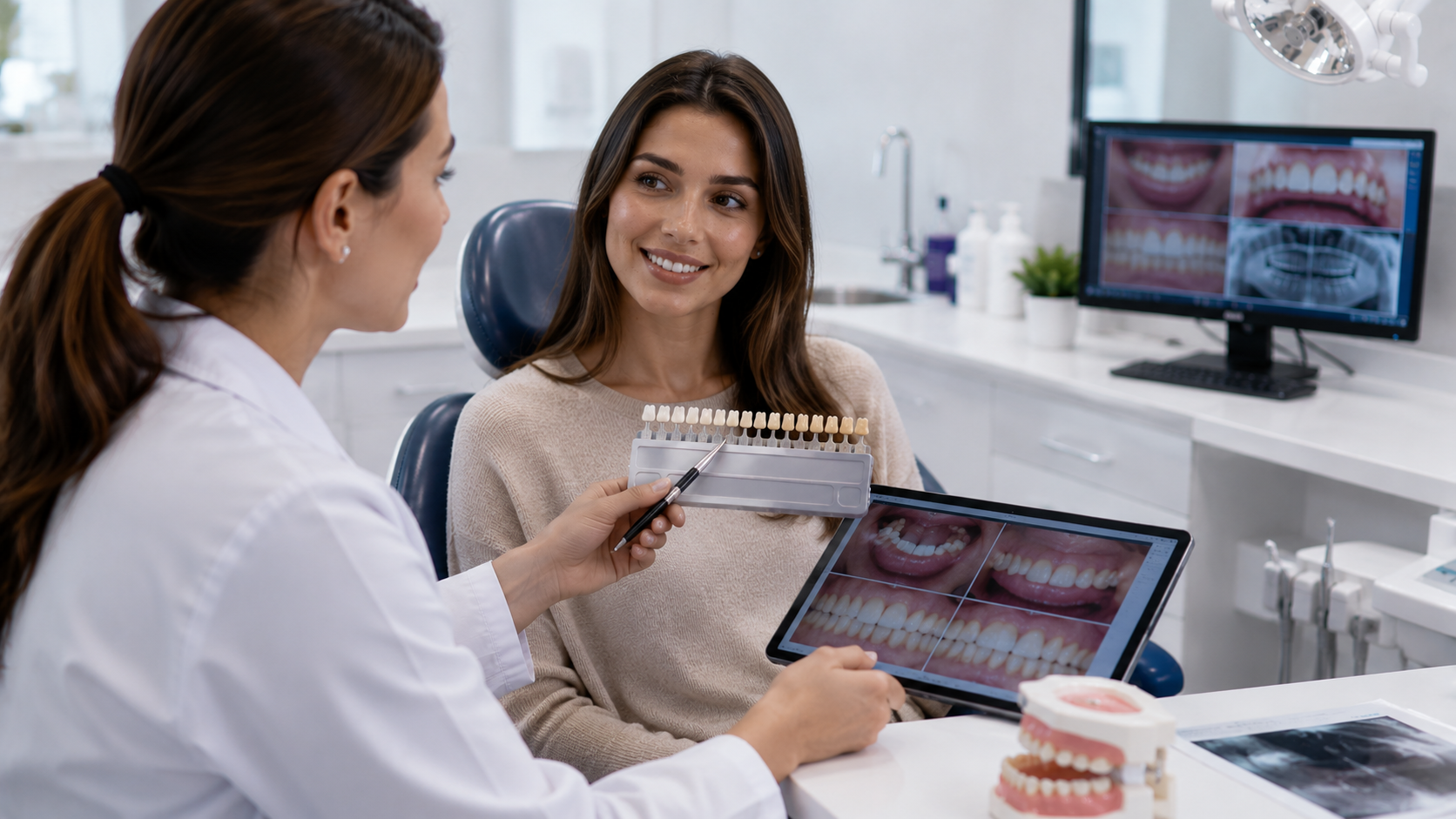
Teeth Whitening is sometimes discussed as though it were a single, standard procedure applied identically to everyone. In practice it is nothing of the sort, and treating it that way produces uneven results and avoidable disappointment.
Consider how much varies between two people sitting in the same waiting room. Their natural Teeth shades differ. Their staining patterns differ, in both cause and depth. One may have sensitive teeth and the other none at all. One may have three visible restorations across the front of the mouth and the other none. Their dental histories differ, and so do the outcomes they are hoping for.
A plan built around those specifics — the actual teeth, the actual staining, the actual history — has a far better chance of producing a result the person is pleased with. Just as importantly, it identifies in advance where the outcome may be uneven, so that nothing comes as a surprise afterwards.
Individual planning also creates space for honesty. It is the point at which a professional can say that a particular expectation is unlikely to be met, or that a dental issue should be addressed first, or that whitening is not the right treatment at this time. Those conversations are far more useful before treatment than after it.
Caring for Your Smile After Whitening
The period immediately following treatment is when a little attention pays off most.
- Follow the aftercare guidance you were given. Advice tailored to your treatment is more relevant than anything general, and it should be followed as provided.
- Maintain your usual oral hygiene. Brushing and interdental cleaning continue as normal unless you have been advised otherwise.
- Be conscious of staining habits. Awareness of what contributes to discolouration is useful straight away rather than months later.
- Monitor how your teeth feel. Some people notice increased sensitivity for a period; noting how it changes is worthwhile.
- Give your teeth time to settle. Appearance and comfort can both take a short while to stabilise after treatment.
- Seek advice if something is not right. Unusual, worsening or persistent problems should be discussed with a dental professional rather than waited out.
Specific instructions about what to eat or drink in the period after treatment will come from the professional who carried it out, based on your treatment and your teeth. Guidance of that kind is worth following precisely, since it is written for your circumstances rather than for a general audience.
Common Questions About Teeth Whitening
The questions below come up regularly. The answers are general — your own circumstances may differ, and a professional assessment is the way to find out how.
What is Teeth Whitening?
Teeth Whitening is a cosmetic dental treatment that lightens the colour of natural teeth. It works on the shade of the Teeth itself rather than simply cleaning the surface, and it is used to improve appearance rather than to treat any dental condition.
How does Teeth Whitening work?
A whitening agent is applied to the teeth for a controlled period. It acts on the pigmented compounds held within the Teeth structure, and as those are broken down the Teeth appears lighter in shade.
Is Teeth Whitening suitable for everyone?
No. Suitability depends on the condition of your teeth and gums, the type of staining present, any existing sensitivity, and the dental work already in place. An assessment is the way to establish whether it is appropriate for you.
How long does Teeth Whitening take?
This depends on the approach agreed after assessment and on individual circumstances. The timescale should be explained to you as part of treatment planning rather than assumed in advance.
Does Teeth Whitening hurt?
Experiences differ. Some people notice no discomfort at all, while others report temporary sensitivity during or after treatment. It would be wrong to describe whitening as entirely without sensation for everyone, which is why comfort should be monitored throughout and any discomfort mentioned at the time.
Can Teeth Whitening cause sensitivity?
Some people do experience increased sensitivity during or after whitening. Where it occurs it is generally temporary, though how noticeable it is varies between individuals.
Can I have Teeth Whitening if I have sensitive teeth?
Possibly, but it depends on the cause and degree of the sensitivity. Existing sensitivity should always be raised at the assessment, as it affects how treatment is planned and whether it is appropriate at all.
Can fillings be whitened?
No. Whitening acts on natural Teeth structure, and filling materials do not change colour in the same way. Where a filling is visible in the smile, the difference may become more apparent once the surrounding teeth lighten.
Can crowns and veneers be whitened?
No. Crowns and veneers keep the shade they were made in. If you have either in a visible position, this should be discussed before whitening so you know how the overall appearance is likely to look afterwards.
What causes yellow teeth?
Several factors contribute — pigments from food, drink and tobacco, natural thinning of the enamel with age, the underlying colour of the dentine, and each person's inherited Teeth shade. Most people are affected by more than one at once.
Can tea and coffee stains be removed?
Staining associated with tea and coffee is often the type that responds reasonably to whitening, though the degree of change varies with how established the staining is. Continuing the same habits will influence how long the improvement lasts.
Can smoking stains be improved?
Improvement is possible in many cases, but tobacco staining can be persistent and outcomes vary considerably. Continued smoking after treatment affects how long any change in appearance is maintained.
How long do Teeth Whitening results last?
There is no fixed answer. It depends on your teeth, the original cause of the discolouration, your oral hygiene and your everyday habits. Regular exposure to strongly coloured food and drink will shorten it.
Can I whiten my teeth more than once?
Repeat treatment is something to discuss with a dental professional rather than decide independently. Whether it is appropriate, and when, depends on the condition of your teeth and how they responded previously.
What should I do after Teeth Whitening?
Follow the aftercare guidance you were given, keep up your usual oral hygiene, be mindful of staining foods and drinks, and note how your teeth feel. If anything unusual or persistent develops, seek professional advice.
Is professional Teeth Whitening different from home whitening?
Yes. The main differences concern assessment beforehand, supervision during treatment, and how far the approach can be adapted to the individual. Which is more appropriate depends on your circumstances rather than on a general rule.
Why do Teeth Whitening results differ between people?
Because the starting point differs. Natural Teeth shade, the type and depth of staining, the condition of the enamel and the presence of dental restorations all vary, and each of them influences the outcome.
When should I speak to a dental professional before whitening?
Before whitening in general, and particularly if you have Teeth pain, bleeding or receding gums, significant sensitivity, damaged teeth, or visible dental work you are concerned about. Any of these should be assessed before cosmetic treatment is considered.
Patient Experiences
People considering Teeth Whitening often want to know what the experience is actually like. While no two accounts are the same, some themes come up more often than others.
Many people describe the assessment as the part that changed their thinking most. Having the cause of their discolouration explained — and hearing an honest view of what could realistically be improved — tends to be more reassuring than any promise about results would have been.
A common reflection afterwards is that the change looked more natural than expected. People often anticipate a dramatic, uniform whiteness and instead notice something subtler: teeth that look fresher and more even, in a way that others register without necessarily identifying why.
Sensitivity is mentioned in both directions. Some notice nothing at all; others report their teeth feeling more reactive for a period before settling. Those who raised previous sensitivity beforehand generally say they were glad they did, because it shaped how the treatment was approached.
Where disappointment arises, it usually relates to expectations rather than the treatment itself — most often a visible crown or filling that stayed the same shade while the surrounding teeth lightened. It is the clearest argument for discussing existing dental work openly before starting.
Our Approach to Patient Care
Good cosmetic dentistry begins with an honest conversation. That means listening to what has actually prompted someone's interest in Teeth Whitening, examining the teeth properly, and explaining what the assessment shows in language that makes sense.
It also means being straightforward about limits. If a dental issue should be addressed first, that should be said clearly. If a particular expectation is unlikely to be met, that is better raised at the outset than left to emerge afterwards. If whitening is not the right treatment for someone at that moment, saying so is part of good care rather than a failure of it.
Comfort is treated as something to monitor rather than assume. Anyone undergoing treatment should feel able to say that something does not feel right, and expect that to be taken seriously and acted on.
Finally, care does not end when the treatment does. Clear aftercare guidance, an honest review of the result, and a route back for any concerns afterwards are all part of treating whitening as a course of care rather than a transaction.
Next Steps and What to Know
If you have read this far, you already have most of what a person needs before considering Teeth Whitening. A few points are worth carrying forward.
- Whitening is cosmetic. It improves the appearance of natural teeth and does not treat dental problems or replace regular dental care.
- An assessment establishes the type of discolouration you have, whether treatment is suitable, and what result is plausible for your teeth.
- Existing dental work will not change colour with the natural teeth around it, so its position and visibility matter.
- Sensitivity, past or present, should always be raised before treatment rather than during it.
- Outcomes vary, and no one can responsibly promise a particular shade or a particular duration in advance.
- Everyday habits and consistent oral hygiene do most of the work in maintaining the appearance afterwards.
If you are unsure whether Teeth Whitening is right for you, an appropriate dental professional can examine your teeth and give you an informed answer based on your own circumstances rather than on general guidance. Anyone experiencing pain, gum problems or unexplained sensitivity should seek that advice before considering cosmetic treatment.
Closing Reassurance
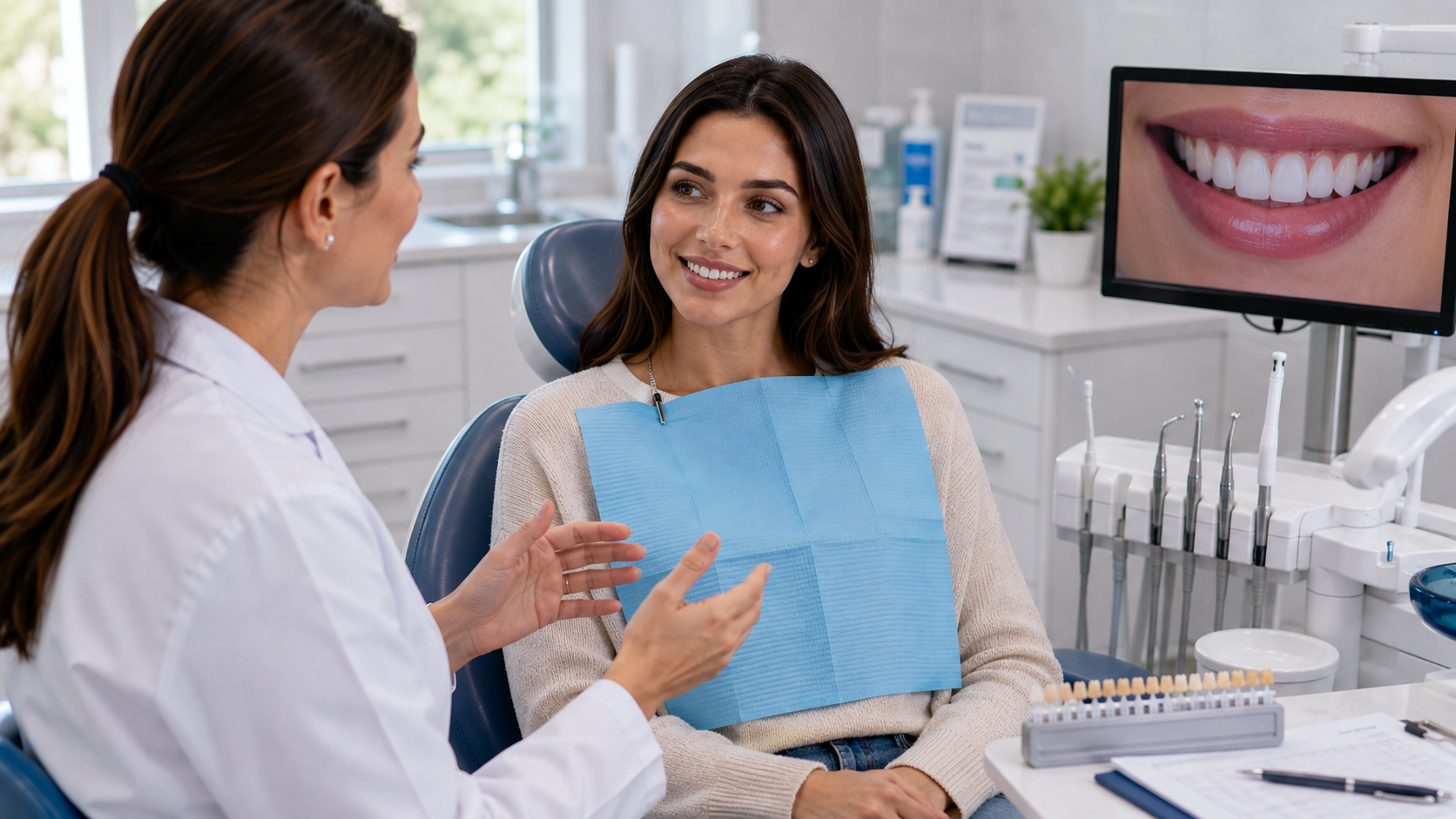
Teeth Whitening can be a worthwhile cosmetic option for people it genuinely suits. Approached properly-with an assessment first, a plan built around the individual, and expectations grounded in what the treatment can actually do-it offers a considered improvement in the appearance of natural teeth.
What it delivers depends on the person: their natural Teeth colour, the type and extent of their staining, the condition of their teeth and gums, and the dental work already in place. Those variables are the reason results differ, and the reason honest, individual assessment matters more than any general claim about outcomes.
Maintaining the result comes down to unremarkable, consistent habits-good oral hygiene, awareness of what causes staining, and regular dental care. None of it is complicated, but it is what makes the difference over time.
Above all, cosmetic whitening sits alongside proper dental care rather than in place of it. Healthy teeth and gums come first; appearance follows from there. If you are considering Teeth Whitening, an assessment with an appropriate dental professional is the most useful next step, and there is no need to hurry the decision.